In Indian homes, an authentic Tanjore painting (Thanjavur Oviyam) is a sacred heirloom. Whether an inherited antique of Navaneetha Krishna glowing with pearls or a newly commissioned Lakshmi in seasoned Chettinad teak, it holds pride of place in living rooms and pooja spaces.
Yet, in urban apartments across cities like Bangalore, art conservators frequently see preventable damage: flaking gold foil, mold behind glass, crumbling relief gesso, and tarnished stones. Most degradation stems not from neglect, but from well-intentioned but harmful cleaning methods and environmental moisture.
Here is a practical guide to safeguarding your Tanjore art for generations.
1. The Organic Chemistry of Authentic Tanjore Art
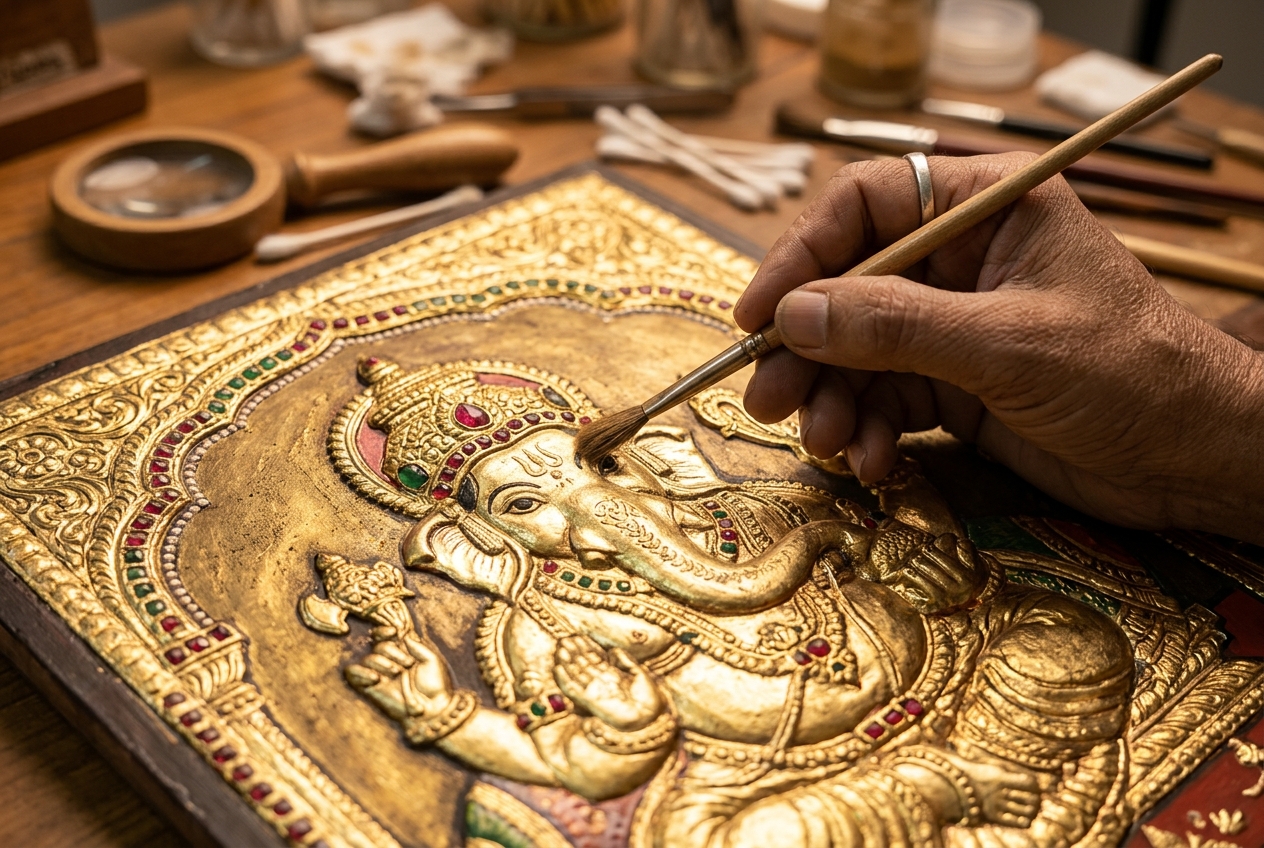
To care for a Tanjore painting, one must understand how it is constructed:
- **The Base (Palagai):** Jackfruit wood or marine plywood wrapped in unbleached cotton cloth using tamarind seed paste.
- **The Relief Gesso (Mukhyam or Muck Work):** 3D raised arches and jewelry hand-sculpted from chalk powder (chuna) and water-soluble gum Arabic.
- The 22K Gold Foil: Beaten leaves of 22-karat gold pressed over dried relief using organic gum.
- Embedded Stones: Jaipur cut-glass stones and pearls pressed into wet gesso before gilding.
Because the binders holding the artwork together are water-soluble, exposure to moisture, liquid sprays, or severe humidity swings dissolves the foundation beneath the gold.
2. Three Environmental Threats in Modern Homes
Urban living introduces specific hazards:
- Monsoon Swings: During Bangalore’s monsoons (July–October), humidity exceeds 80%. As gum Arabic absorbs moisture, it swells slightly. In dry winter cold, it contracts rapidly. This micro-movement creates hairline fissures, causing gold foil to lift and flake.
- Pooja Smoke and Soot: Hanging a painting directly above oil lamps (diyas) and incense (agarbatti) coats the artwork in acidic carbon soot. This film dulls the gold’s natural shimmer and permanently discolors tempera skin tones.
- Thermal Shock from ACs: Positioning artwork in an air conditioner’s direct draft causes rapid temperature swings, creating condensation droplets inside the framing glass.
- The Spacer Bead (Never Allow Glass-to-Gesso Contact):
- Backboard Breathing: Avoid airtight plastic sealing. Use acid-free archival backing with tiny micro-vents to let the wood breathe and prevent mildew.
- UV Museum Glass: Consider upgrading to anti-reflective museum glass to eliminate harsh glare and prevent mineral pigments from fading.
- Check the bottom frame ledge twice a year. If you spot fine yellow powder (frass), wood-boring insects have entered the wood.
- Avoid commercial pest sprays. Instead, wipe the exterior timber with a soft cloth lightly treated with natural clove oil and cold-pressed neem oil. Clove oil’s natural eugenol deters borers and termites safely.
3. Cleaning Do’s and Don’ts
When dust settles, how you clean makes all the difference:
Never spray liquid directly onto the glass. Fluid migrates downward via capillary action, pooling in the bottom moulding and seeping into the painting’s base.
4. Framing Best Practices: The Crucial Spacer
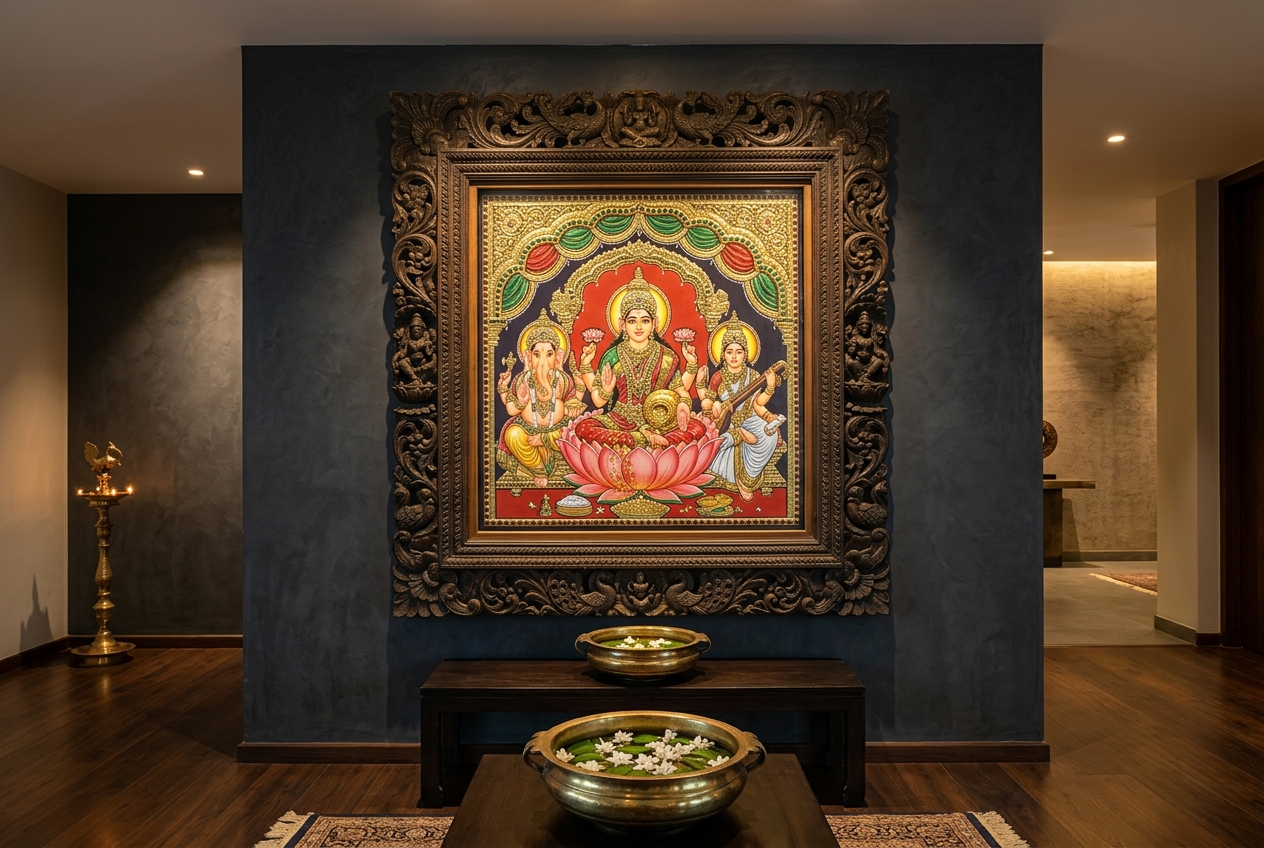
If framing or reframing a Tanjore piece, insist on two critical structural standards:
Raised gesso and stones must never touch the glass. Condensation on inner glass transfers moisture straight into the gold relief. Ensure the framer adds a 3mm to 5mm wooden spacer bead along the frame’s inner perimeter to maintain an air gap.
5. Protecting Vintage Teak Mouldings
Authentic South Indian frames are carved from Chettinad seasoned teak or rosewood:
6. Living Heritage at Kailasa Kaladhara
At Kailasa Kaladhara, our fine arts division treats Tanjore painting as a sacred living craft. In our Tanjore Art Masterclasses in South Bangalore, master artists guide students through traditional gesso relief sculpting, 22K gold embossing, and long-term art conservation.
An authentic Tanjore painting cared for with proper knowledge does not age—it matures, acquiring a rich antique patina that endures across generations.
Interested in mastering the authentic craft of 22-Karat gold leaf Tanjore painting under traditional master artists? Explore our Tanjore Painting Classes in Bangalore or visit our studio gallery at Kailasa Kaladhara HSR Layout.