It is a Saturday morning scene familiar across gated communities in South Bangalore: an Arangetram candidate, her guru, a mridangist, and a classical vocalist gather in an apartment clubhouse.
Within twenty minutes, frustrations mount. The mridangam’s bass strokes (thoppi) bounce uncontrollably off bare concrete walls, creating a muddy acoustic rumble that drowns out the tanpura’s shruti. The sharp clash of nattuvangam cymbals rings with an ear-splitting slapback echo. The vocalist strains their voice just to stay on pitch. Meanwhile, forty-five minutes into the Varnam, the dancer feels sharp pain radiating up her shins. Shortly after, security knocks on the glass door: an upstairs resident has lodged a noise complaint.
For serious artists across Bangalore, this “clubhouse compromise” is a constant hurdle. While convenient, practicing classical Indian dance and acoustic music in non-specialized rooms strains performer health, compromises ensemble synchronization, and hampers artistic polish.
Here is the acoustic and orthopedic science behind why dedicated studios are non-negotiable for serious rehearsals.
1. The Orthopedic Hazard: Hard Tile Floors vs. Sprung Wood
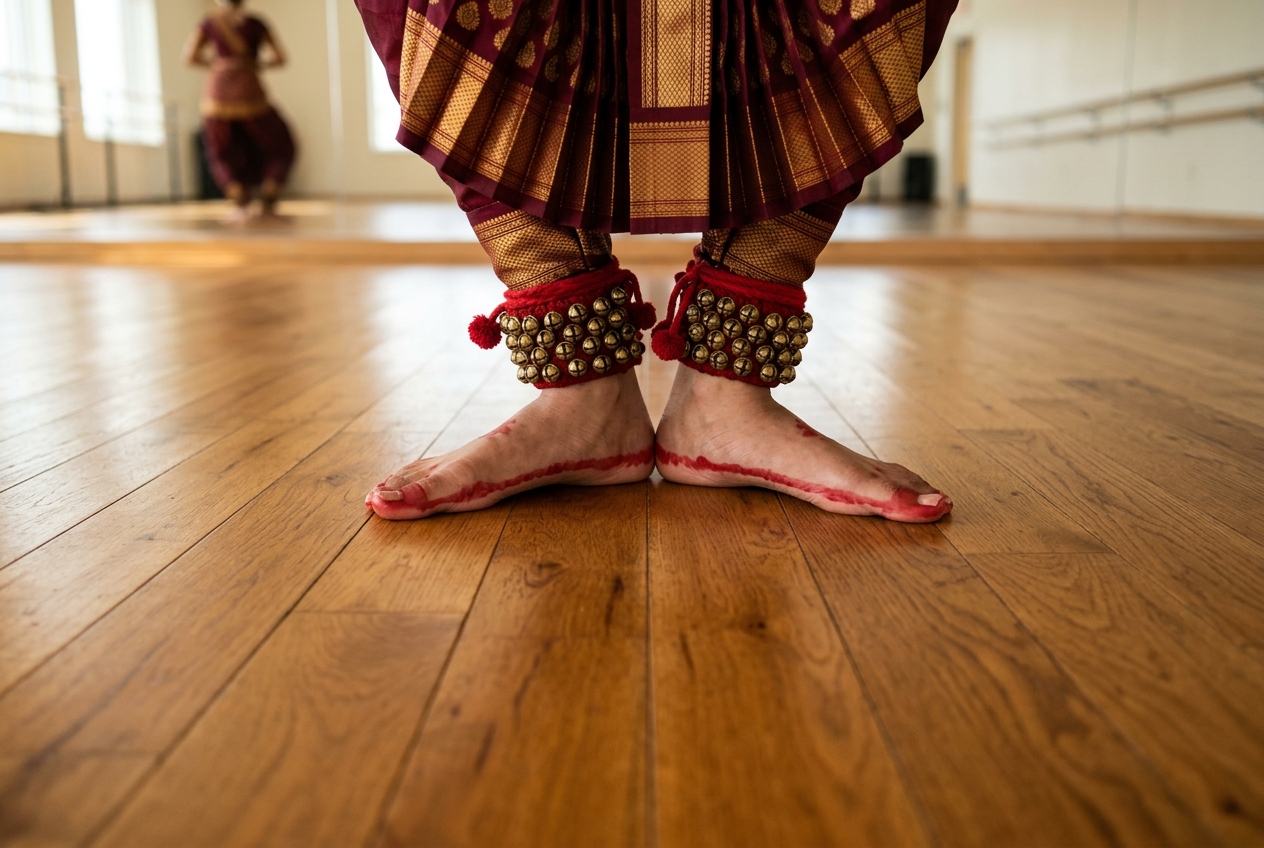
Indian classical dance is a percussive discipline. In Bharatanatyam, Kuchipudi, and Kathak, the foot strikes the ground with force. A single high-energy Thattadavu or Kuditta Metadavu exerts a ground reaction force equal to 3 to 5 times the dancer’s body weight.
When a dancer strikes concrete or vitrified porcelain tile:
- Zero Shock Absorption: Concrete has virtually zero impact dissipation. Every ounce of kinetic energy generated by the foot stomp rebounds directly up the skeletal chain—from the calcaneus through the tibia into the knee meniscus and lower lumbar vertebrae.
- The Toll of Intensive Practice: Students preparing for an Arangetram often increase practice to 12–18 hours per week. On unyielding tile floors, repetitive shock leads directly to tibial periostitis (shin splints), metatarsal stress fractures, and chronic patellar tendonitis.
The Physics of Sprung Wooden Flooring
A professional dance floor is a floating sprung system:
- Top Layer: Premium tongue-and-groove hardwood planks.
- Subfloor Matrix: Dual cross-laid marine plywood battens.
- Cushioning Base: High-density dual-durometer neoprene rubber pads over an air buffer.
This assembly delivers controlled progressive deflection: when a dancer lands, the floor flexes microscopically (absorbing up to 53% of the impact force). As the dancer rebounds into the next movement, the floor gently returns energy, cutting muscular fatigue in the calves and lower back. Dancers can rehearse for three hours on a sprung wooden floor with less joint fatigue than thirty minutes on polished tile.
2. Acoustic Balance: Flutter Echo vs. Clean Clarity
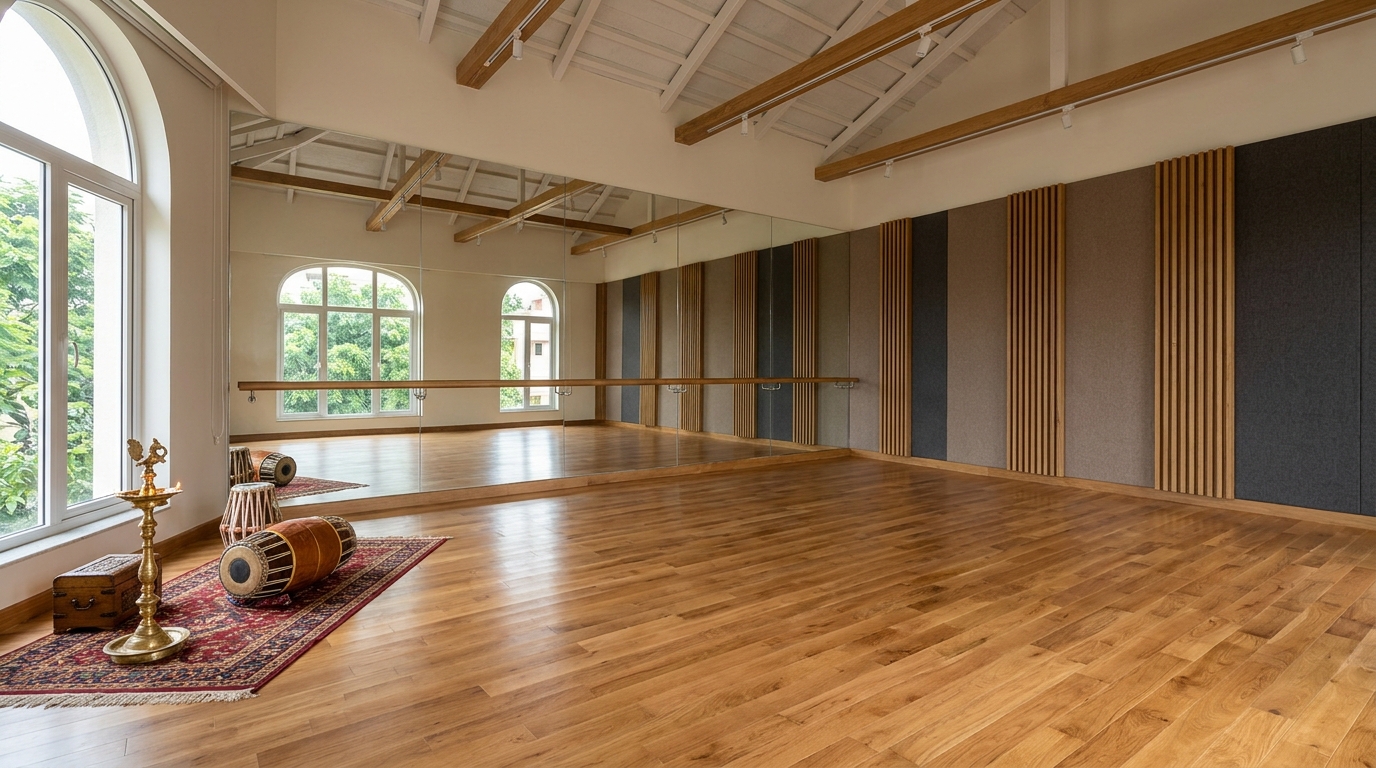
In Indian classical music, microtonal pitch accuracy (swara sthana) and rhythmic precision are paramount. Residential clubhouses, however, present severe acoustic flaws:
- Flutter Echo: Parallel bare walls and sliding glass doors trap high-frequency reflections. The brass thalam (cymbals) produces a harsh, metallic ringing that causes rapid ear fatigue.
- Standing Bass Waves (Room Modes): The mridangam’s bass head (thoppi) operates between 80Hz and 180Hz. In untreated rooms, these low frequencies pool in corners, creating an acoustic rumble that obscures the singer’s root note (shadjam) and forces vocal strain.
A purpose-built rehearsal studio integrates broadband acoustic absorption panels paired with timber diffusers. The acoustic profile stays warm and lively without ringing, allowing vocalists and instrumentalists to hear nuanced dynamics without shouting.
3. Visual Lines: Continuous Mirrors vs. Segmented Glass
Ensemble synchronicity depends heavily on peripheral cues:
The Problem with Segmented Mirrors:
Many community halls feature segmented glass panels with wide plastic dividers. When checking line and posture, seams visually slice through the dancer’s arms or neck, distorting their perception of Natyarambha (the horizontal arm line).
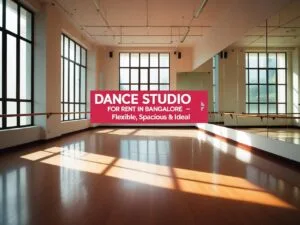
A professional studio provides continuous, distortion-free, floor-to-ceiling mirror runs, enabling dancers to check full-body geometry from anywhere on the floor.
4. The Psychological Shift of a Dedicated Studio
Beyond acoustics and biomechanics lies performer psychology. Rehearsing in an apartment clubhouse next to a swimming pool with casual onlookers scatters focus.
Stepping into an acoustically isolated, beautifully lit professional studio signals an immediate shift:
- Sacred Focus: The quiet, intentional space mirrors the discipline of a traditional Gurukulam.
- Immersion: Dancers and musicians leave domestic distractions outside, fostering productive sessions where a two-hour rehearsal yields more progress than an entire weekend of distracted practice.
5. Professional Rehearsal Spaces at Kailasa Kaladhara
At Kailasa Kaladhara, our rehearsal studios in South Bangalore were built by artists, for artists. Located conveniently between HSR Layout and Haralur, our facilities eliminate the clubhouse dilemma:
- Engineered Sprung Wooden Floors: Custom dual-layer subfloor cushioning that protects performer joints during long rehearsals.
- Treated Acoustics: Balanced reverberation optimized for mridangam, veena, violin, and vocal clarity.
- Full-Span Seamless Mirrors: Unbroken sightlines for soloists and large 12-member troupes.
- Artist Amenities: Climate-controlled ventilation, clean dressing rooms, and hassle-free scheduling without domestic noise restrictions.
Give your art the space, acoustic balance, and orthopedic care it deserves.
Planning an upcoming Arangetram, winter production, or acoustic baithak in South Bangalore? Explore our Dance & Music Studio Rentals in Bangalore or tour our facilities at Kailasa Kaladhara HSR Layout.