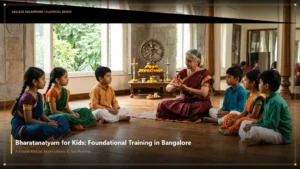
Watching a five-year-old child instinctively bounce to music is a common sight in Indian households. However, channeling that spontaneous energy into the structured geometry, rhythmic precision, and expressive storytelling of classical dance requires thoughtful pedagogy. For parents seeking bharatanatyam classes for kids bangalore, the journey begins with understanding how early classical training shapes developing minds and bodies.
At Kailasa Kaladhara School of Performing Arts, our children’s curriculum balances traditional rigorous technique with age-appropriate physical conditioning. Long before an aspiring dancer learns a full Margam repertoire or prepares for an Arangetram debut, they build spatial awareness, bilateral coordination, and emotional poise.
1. The Golden Window: When Should Children Begin?
Parents frequently ask whether age four is too early or age eight is too late. In classical Indian pedagogy, the ideal starting age falls between five and seven years old.
Child's Age (Years)   Developmental Focus               Syllabus Milestones
---------------------------------------------------------------------------------
5 – 6 Years           Rhythm Claps, Basic Hastas        Talam Drills, Animal Mudras
6 – 7 Years           Aramandi Geometry & Posture       Tattu & Nattu Adavus
7 – 9 Years           Speed Variations (Kalam)          Kuditta Mettu, Jathis
9+ Years              Abhinaya & Shloka Expression      Alarippu, Jatiswaram
At age five, a child’s skeletal framework is pliable, and their auditory cortex is extraordinarily receptive to rhythmic meters (talam). Starting earlier than five often strains developing ankle ligaments; waiting beyond eight means older children must unlearn postural habits before developing the deep turn-out required for classical stances.
2. Building the Core Architecture: Aramandi and Angashuddhi
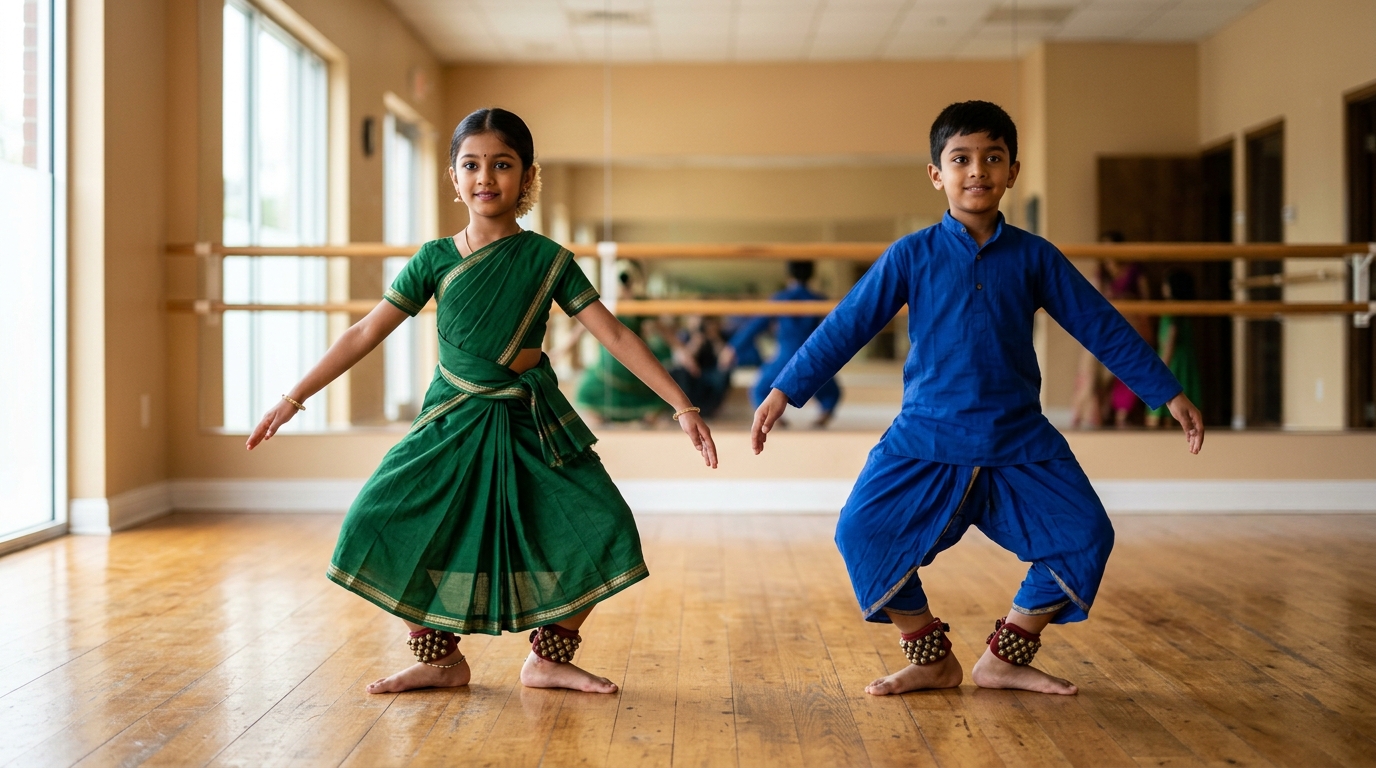
The foundational posture of Bharatanatyam is Aramandi (also known as Ayathmandala or the half-seated demi-plié). For young children, mastering this stance requires gradual neuromuscular conditioning:
- 180-Degree Knee Abduction: The knees must track outward in line with rotated feet, keeping the spine completely erect without tilting the pelvis forward.
- Grounded Heel Distribution: Weight distributes evenly across the tripod of the foot—heel, ball, and outer lateral edge—preventing flat-footed collapse.
- Torso Stability (Angashuddhi): Clean structural lines ensure the arms remain energized horizontally at shoulder level during rapid footwork cycles.
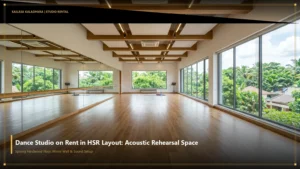
To safeguard growing joints, training must take place on shock-absorbent surfaces. Rehearsing on hard marble or unpadded tiles reflects kinetic shock directly into young knees and shins. Our academy prioritizes specialized sprung wooden dance studio infrastructure across all Bangalore branches to ensure injury-free growth.
3. Cognitive Wiring: Tala Math and Mudra Literacy
Bharatanatyam is far more than physical exercise; it functions as an embodied mathematical discipline. When children count beats in Adi Tala (an 8-beat cycle comprising a laghu and two dhrutams) and subdivide each pulse into three, four, or seven micro-beats, their working memory and cognitive agility expand exponentially.
- Single-Hand Gestures (Asamyuta Hastas): Twenty-eight distinct hand mudras—from Pataka (flag) to Chandrakala (crescent moon)—sharpen fine motor dexterity.
- Double-Hand Gestures (Samyuta Hastas): Twenty-four combined gestures teach bilateral brain coordination and spatial balance.
- Spoken Rhythmic Blueprint (Solkattu): Reciting syllables like Tha-Dhi-Thom-Nam alongside hand claps mirrors the cognitive benefits of spoken Konnakol rhythm training, improving phonetic clarity and classroom attention span.
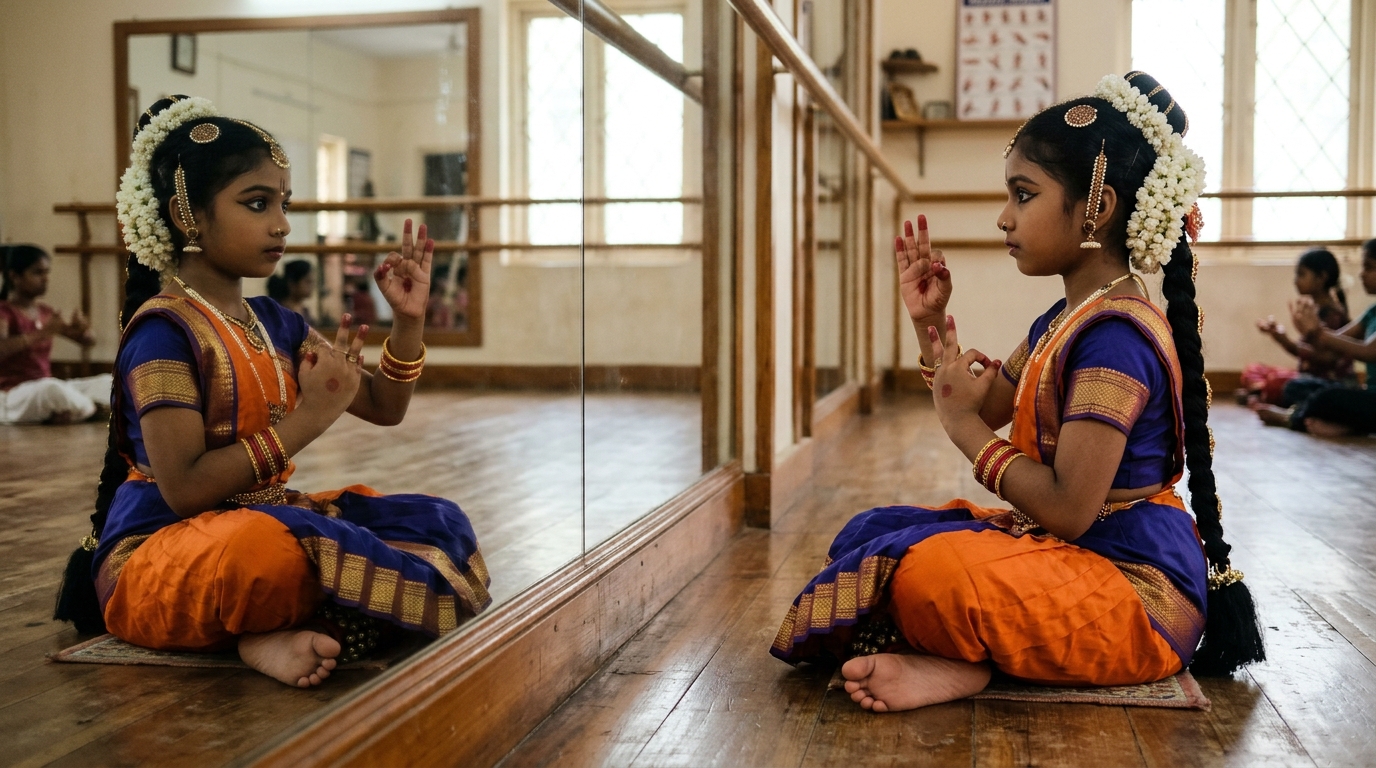
4. Emotional Poise and Cultural Grounding in Urban Life
Modern urban living in Bangalore often isolates children behind digital screens, contributing to sedentary habits and attention fatigue. A structured classical arts academy provides a grounded community where young learners connect with living heritage.
Through Navarasas (the nine classical emotional states), children learn to identify, channel, and articulate human emotions—joy, courage, compassion, and wonder—in a safe, structured environment. Shloka chanting from the Natya Shastra enhances respiratory endurance and diction.
Why Parents Choose Kailasa Kaladhara for Kids
- Direct Guru Mentorship: Guided by Dr. K. Jayalakshmi Jithendra with over four decades of traditional lineage.
- Small Group Attention: Batches capped to ensure personalized posture and mudra corrections for each child.
- Certified Examination Syllabus: Systematic preparation for Karnataka State Board and Gandharva Mahavidyalaya grade exams.
- Multiple South Bangalore Locations: Convenient centers in Jayanagar, Haralur Road, BTM Layout, and Hongasandra.
Conclusion: Enroll Your Child in Authentic Classical Arts
Nurturing an appreciation for classical Indian dance at a young age instills lifelong physical grace, mental resilience, and cultural pride. Whether your child aspires to complete a solo stage debut or simply gain confidence and posture, starting with authentic foundational training makes all the difference.
Explore our batch timings and enroll your child today at our Kailasa Kaladhara branch locations or book an introductory studio walkthrough.