To the untrained eye, classical South Indian sacred paintings look remarkably similar: serene portraits of deities adorned in radiant gold, encased within ornate temple archways and intricate royal frames. Both Mysore painting and Tanjore painting trace their lineage back to the artistic renaissance of the Vijayanagara Empire. When the empire fell in 1565, master painters migrated south into two distinct royal courts: the Wodeyar dynasty in Mysore and the Maratha rulers in Thanjavur.
Over the succeeding centuries, these sister traditions developed sharply contrasting visual philosophies, tactile textures, and material recipes. Whether you are an art student choosing a workshop or a collector evaluating an heirloom artwork, understanding these structural differences reveals the genius of each school.
1. The Gesso Foundation: Subtle Relief vs Dramatic Embossing
The most immediate tactile distinction between the two styles lies in the relief work (gesso paste) that creates raised architectural borders, jewelry, and thrones.
- Mysore Painting (Low, Whispering Relief): The Mysore school prizes understated royalty and delicate draughtsmanship. Its gesso paste is made from finely sieved white lead (zinc oxide), pure gum arabic, and makki (yellow ochre). When applied with a fine sable brush, it rises barely 1 to 2 millimeters from the board. The relief is smooth, subtly curved, and never overwhelms the fine brush lines of the deity’s face.
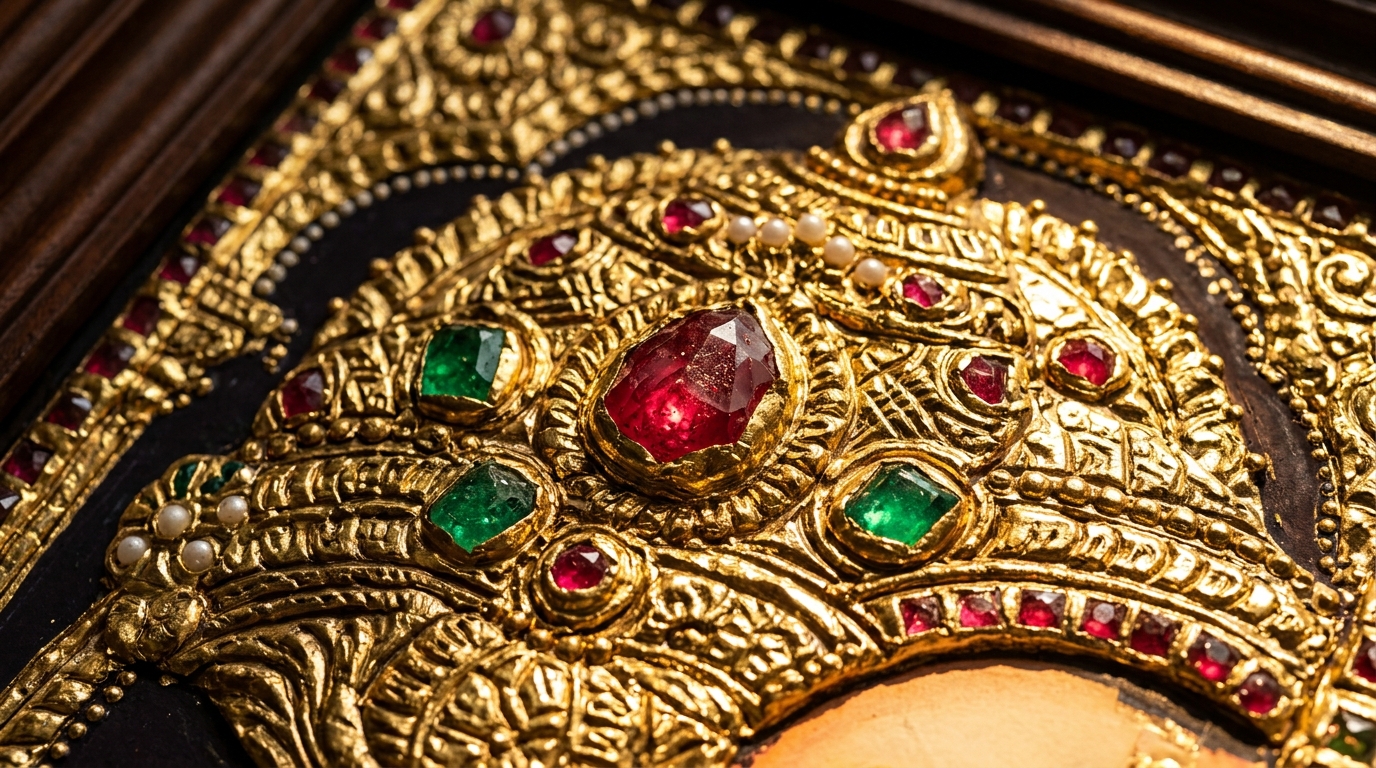
- Tanjore Painting (High, Sculptural Relief): Tanjore paintings celebrate dramatic, three-dimensional grandeur. The traditional gesso compound (sukka paste) combines powdered unboiled limestone (makkul), tamarind seed gum, and chalk powder. It is piped or layered generously, rising up to 5 to 8 millimeters off the teak baseboard. This heavy relief creates deep shadows and accommodates embedded cut glass, Jaipur stones, and semi-precious gems.
| Feature | Mysore Traditional Painting | Tanjore Classical Painting |
|---|---|---|
| Gesso Composition | Zinc oxide, gum arabic, makki powder | Limestone powder, tamarind gum, chalk |
| Relief Height | Low relief (1–2 mm), delicate contouring | High relief (4–8 mm), sculptural depth |
| Gold Medium | Pure 24-karat delicate gold leaf (varaq) | Heavy 22-karat gold foil rolled on paper backing |
| Embellishment | Fine brush shading; rare stone inlays | Faceted glass stones, pearls, Jaipur gems |
| Facial Aesthetics | Soft watercolor-like washes, luminous eyes | Rounded, full-cheeked, iconic temple gaze |
2. Gold Leaf Handling: 24K Varaq vs 22K Foil
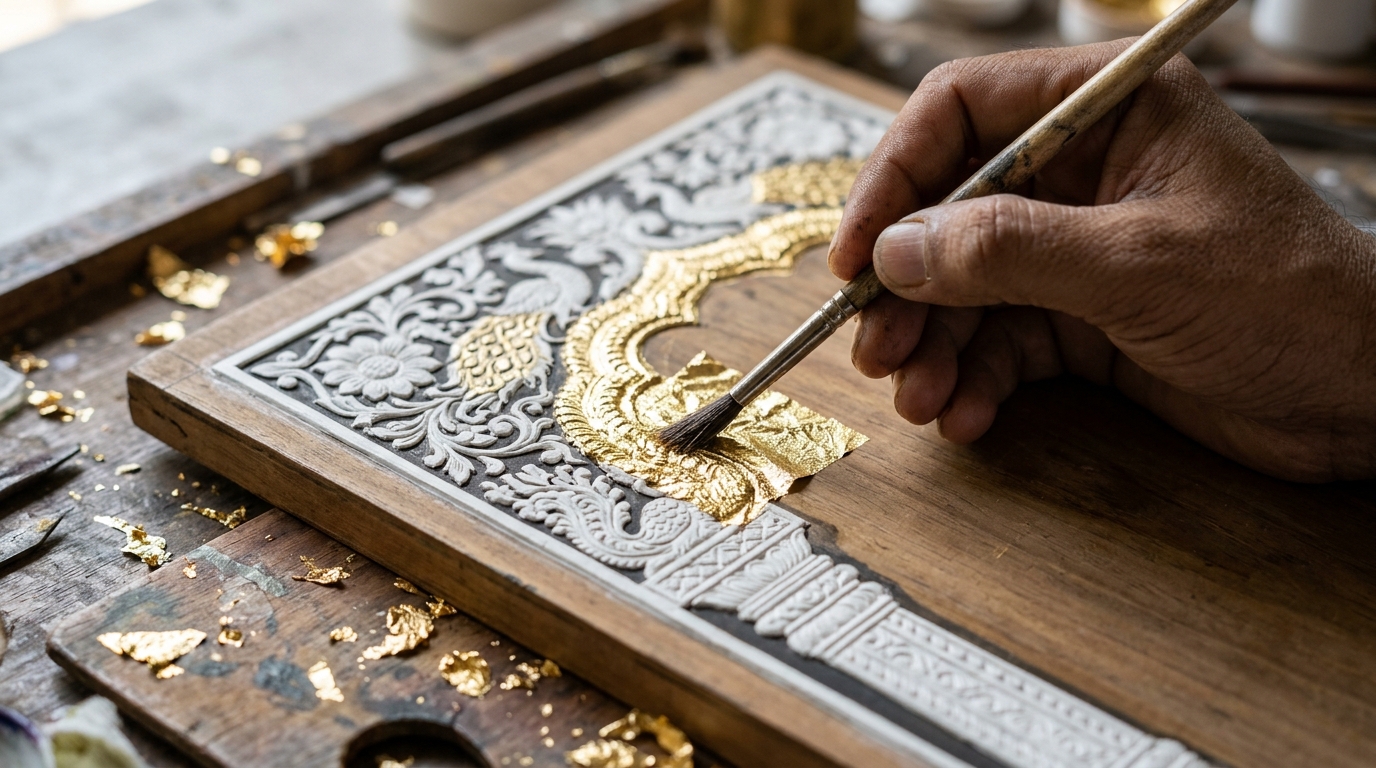
Gold is central to both traditions, but the way artists apply and burnish it requires entirely different techniques:
In Mysore painting, artists use whisper-thin, pure 24-karat gold leaves (varaq). Because the leaf is so light that a gentle breath can scatter it, the artist lifts each sheet with a squirrel-hair brush charged with natural static electricity, laying it gently over the tacky gesso. Excess gold is softly brushed away. The gold hugs the subtle contours without creasing, leaving an ethereal, matte-satin sheen that lets the fine background painting shine.
In Tanjore painting, the gold used is a robust 22-karat gold foil bonded to paper backing. The artisan cuts precise shapes to fit pillars, crowns (kireetams), and necklaces, pasting it firmly over the dry, sculpted gesso and burnishing it with a smooth agate stone (kallu). The result is a gleaming, mirror-like metallic armor built to withstand centuries. Proper stewardship of this heavy gold relief is detailed in our guide on caring for Tanjore art and preserving gold foil.
3. Pigments, Facial Expression, and Linework
Beyond the gold and gesso, the soul of each painting rests in the painterly treatment of the figures:
- The Mysore School of Delicate Expressions: Mysore artists were master portraitists. Influenced by classical Kannada court aesthetics, the figures possess elongated almond eyes, graceful postures, and soft, lifelike expressions. The color palette relies on gentle natural washes, subtle watercolor glazes, and intricate micro-stippling on garments. The background often depicts scenic palace landscapes or soft floral curtains. Students exploring these nuanced brush strokes often start in structured Mysore painting classes and workshops.
- The Tanjore School of Iconic Radiance: Tanjore paintings are sacred icons meant for temple sanctums and home prayer altars (puja rooms). The divine figures are portrayed with round, plump faces, large lotus eyes (kamala nayana), and robust, divine proportions. Backgrounds are intentionally kept dark—deep vermillion reds, midnight blues, or forest greens—to make the shimmering gold relief pop under oil-lamp illumination.
4. Substrates and Framing Traditions
Even the final framing reveals the distinct heritage of the two sister styles:
- Mysore Frames: Framed behind clear glass in clean, slender rosewood or teak mouldings with neutral silk mats. Because the relief is low, the painting sits close to the glass without touching it.
- Tanjore Frames: Traditionally mounted in deep, heavy Chettinad-style teakwood “Mani” frames (beaded carved frames) with deep shadowbox spacing to ensure the thick glass never compresses the raised stone and gold relief.
Choosing between Mysore and Tanjore art is never a question of superiority; it is an appreciation of two complementary artistic visions. Mysore painting invites intimate, close-up admiration of brushwork and quiet royalty, while Tanjore painting commands the room with magnificent, three-dimensional sacred opulence.