
Walk into a stylish contemporary home in Bangalore, and you are increasingly likely to spot a luminous white textured wall piece sparkling with mirrors: Lippan Art, traditionally known as Lippan Kaam.
Originating from the mud huts (*Bhungas*) of the Rabari pastoral community in Kutch, Gujarat, this ancient craft has taken the modern interior design world by storm.
What Is Lippan Art?
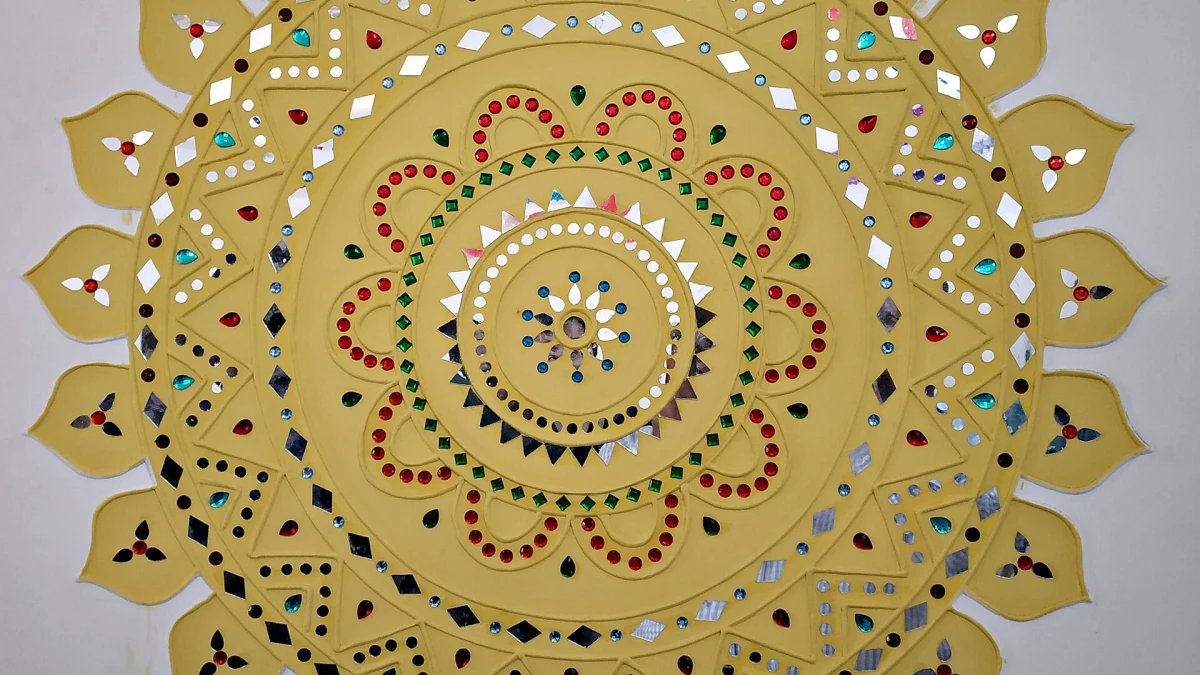
Lippan Art is a traditional mural craft created by kneading clay dough into thin cylindrical coils, laying geometric and organic patterns on a board, and embedding glittering mirrors (*Abhla / Shisha*) within the clay borders. Traditionally painted in pure white chalk, it creates an enchanting interplay of light, shadow, and reflection.
Its rustic texture and bohemian elegance make it one of the most sought-after weekend DIY crafts for home décor enthusiasts.
The Desert Origins: Thermal Comfort Meets Divine Light
In the arid Rann of Kutch, mud huts faced blazing daytime heat and chilly desert nights:
- Villagers mixed local desert clay with camel dung (acting as an organic thermal insulator and fiber binder).
- They plastered walls with this mixture to keep interiors cool during summers and warm during winters.
- Small mirrors were embedded to catch the dim flicker of single oil lamps, multiplying illumination throughout the windowless huts.
Modern Lippan Art: Adapted for Urban Homes
Today’s urban crafters do not need to work with camel dung! Modern art techniques have adapted Lippan art for contemporary living spaces:
- MDF Board Canvas: Sturdy pre-cut circular or rectangular wooden boards provide a durable, warp-free foundation.
- Ceramic / Terracotta Clay Dough: Air-dry clay mixed with synthetic adhesives ensures smooth, flexible rolling without cracking.
- Geometric Patterning: Traditional motifs like peacocks, trees of life, mandalas, and rhythmic chevrons form the structural grid.
The Therapeutic Joy of Clay Coiling & Mirror Inlay
Beyond its visual beauty, crafting Lippan art is deeply therapeutic:
Rolling clay coils between your palms stimulates tactile sensory receptors, releasing daily stress and anxiety. Carefully placing miniature diamond and circular mirrors into wet clay cultivates mindfulness and visual symmetry, providing a refreshing break from digital screens.
Color Palettes: From Pristine White to Vibrant Earth
While traditional Kutch murals are finished in chalky monochromatic white to emphasize textures, modern decorators love experimenting with rich terracotta, indigo blue, sage green, and warm ochre backdrops that make embedded mirrors sparkle brilliantly.
Weekend Art Workshops at Kailasa Kaladhara
Looking to create your own Lippan masterpiece in Bangalore? Kailasa Kaladhara hosts engaging, hands-on Lippan art workshops across our city centers. We provide all premium materials, guided instruction, and finishing sealants so you take home a gallery-worthy piece.
Frequently Asked Questions (FAQs)
Do I need previous art experience to attend a Lippan workshop?
No experience is needed! The step-by-step clay coiling and mirror placement techniques are simple and enjoyable for beginners of all ages.
How do I clean a finished Lippan art piece at home?
Use a dry soft-bristled paintbrush or clean microfiber cloth to dust the textured clay ridges and mirrors. Avoid damp towels or water sprays.
How long does the clay take to cure completely?
Air-dry clay typically cures rock-hard within 24 to 36 hours, after which protective acrylic sealants can be applied.
Transform Your Living Space with Folk Magic
Brighten your home with the desert sparkle of Kutch. Join our upcoming Lippan art and craft workshops at Kailasa Kaladhara Bangalore!













