
In our hyper-connected, fast-paced urban lives, chronic anxiety, sensory overload, and burnout have become everyday struggles. While traditional therapy and meditation are vital, many people find sitting silently with racing thoughts intimidating.
This is where Art Therapy through traditional Indian painting offers a gentle, creative pathway to inner peace and emotional balance.
How Does Traditional Indian Art Heal the Mind?
Traditional Indian art forms—such as Mandala drawing, Warli tribal art, and Madhubani line work—use repetitive, rhythmic geometric patterns and centered radial compositions. Engaging in these focused repetitive motions lowers cortisol (stress hormones), induces alpha brainwave states associated with deep calm, and restores emotional equilibrium without verbal pressure.
You do not need to be a “talented artist” to experience these profound therapeutic benefits.
1. The Sacred Geometry of Mandalas: Finding Your Center
The Sanskrit word Mandala translates to “circle” or “wholeness.” Used for millennia in Indian spiritual traditions, mandalas represent the cosmos and the inner self:
- Starting from the central sacred point (*Bindu*), the artist expands outward in concentric rings.
- This radial symmetry pulls scattered, anxious thoughts back into a single unified focus.
- Psychiatrist Carl Jung famously recognized mandalas as powerful archetypes of psychological self-healing and emotional integration.
2. Warli Art: The Joy of Primitive Simplicity
Originating from the indigenous tribes of the Western Ghats, Warli painting relies entirely on three elementary geometric shapes: the circle (sun and moon), the triangle (mountains and trees), and the square (sacred hearth):
Its lack of complex perspective removes the fear of “making a mistake.” Drawing simple human figures holding hands in celebration reminds the mind of community, nature, and the unhurried rhythms of village life.
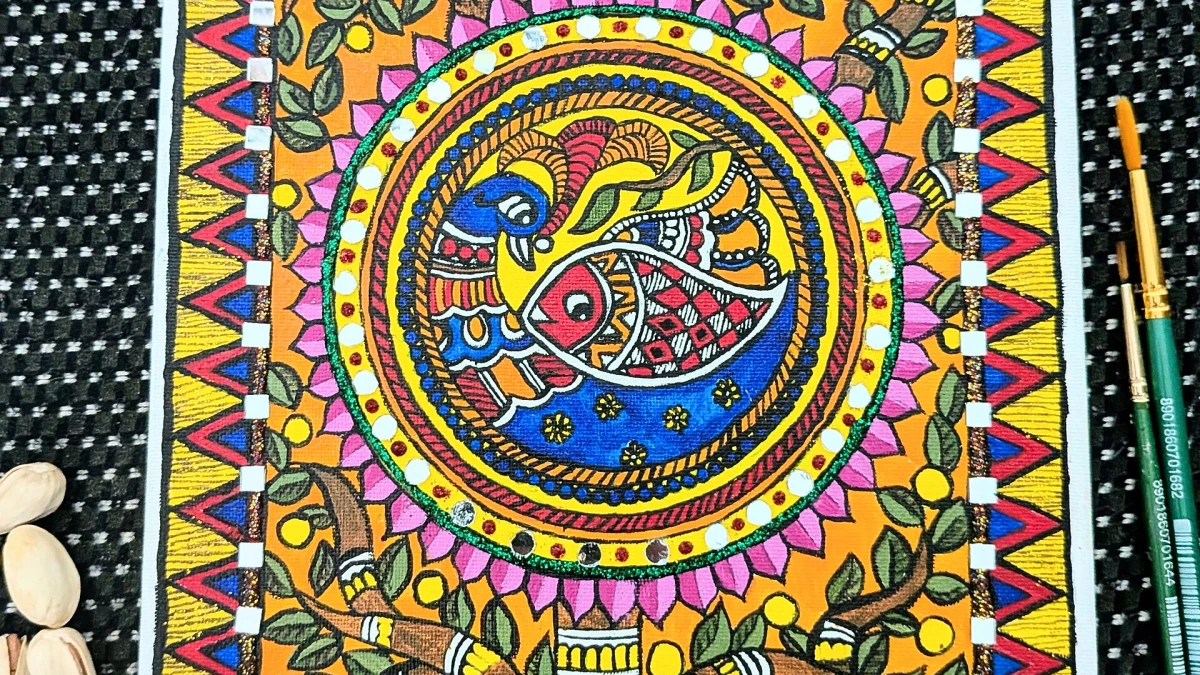
3. Madhubani (Mithila) Line Work: Inducing Mindful Flow
Characterized by intricate double lines filled with fine hatching (*Kachni*) and vibrant colors (*Bharni*):
Filling tiny geometric spaces with delicate, repetitive parallel lines requires steady, mindful hand control. This gentle rhythm mimics meditative breathing, slowing down racing heart rates and calming overstimulated nervous systems.
The Neuroscience of Tactile Creation
When you hold a fine-tipped brush, mix earthen pigments, and place steady strokes on paper, you engage multiple sensory centers in the brain. This tactile engagement activates the parasympathetic nervous system, shifting your body from high-stress “fight-or-flight” into restorative “rest-and-digest” mode.
Mindful Art Programs at Kailasa Kaladhara
At Kailasa Kaladhara Bangalore, our visual arts sessions provide a peaceful sanctuary away from traffic noise and digital notifications. Guided by empathetic instructors, our workshops focus on personal creative expression, self-discovery, and the soothing joy of traditional crafts.
Frequently Asked Questions (FAQs)
Do I need drawing experience to benefit from art therapy?
None at all! The therapeutic value comes from the mindful process of creating repetitive patterns, not from achieving photographic realism.
How often should one practice mindful painting?
Even 30 to 45 minutes of mindful drawing twice a week produces noticeable reductions in everyday anxiety and mental clutter.
Can children benefit from mindful traditional art?
Yes. Children struggling with hyperactivity or short attention spans develop remarkable patience and emotional calm through mandala and tribal art sessions.
Restore Your Inner Peace Through Art
Give yourself permission to pause, breathe, and create. Explore our traditional mindful art and craft workshops at Kailasa Kaladhara today!













