
South India boasts two glorious royal painting traditions renowned for their divine subjects and radiant gold leaf: Mysore Painting and Tanjore Painting.
While casual observers often confuse them due to shared themes of Hindu deities, artists and art collectors revere them for distinct regional philosophies, embossing techniques, and aesthetic treatments.
What Is the Difference Between Mysore and Tanjore Art?
The primary difference lies in gesso relief height and shading delicacy. Tanjore paintings feature dramatic, heavy 3D gesso embossing heavily studded with sparkling Jaipur stones. In contrast, Mysore paintings feature subtle, low-profile gesso relief with intricate, delicate shading and watercolor-like facial softness, prioritizing painterly refinement over sculptural weight.
Both traditions use pure gold leaf, but Mysore art reveals more painted canvas while Tanjore art covers vast areas in radiant gold foil.
1. Historical Roots and Royal Patronage
The geographical and political origins shaped their distinct visual languages:
- Mysore Painting: Flourished in Karnataka under the visionary patronage of Raja Wodeyar and Mummadi Krishnaraja Wodeyar, capturing classical Hoysala and Vijayanagara grace.
- Tanjore Painting: Developed in Tamil Nadu under Maratha and Nayaka rulers, influenced by Deccani court art and European compositional balance.
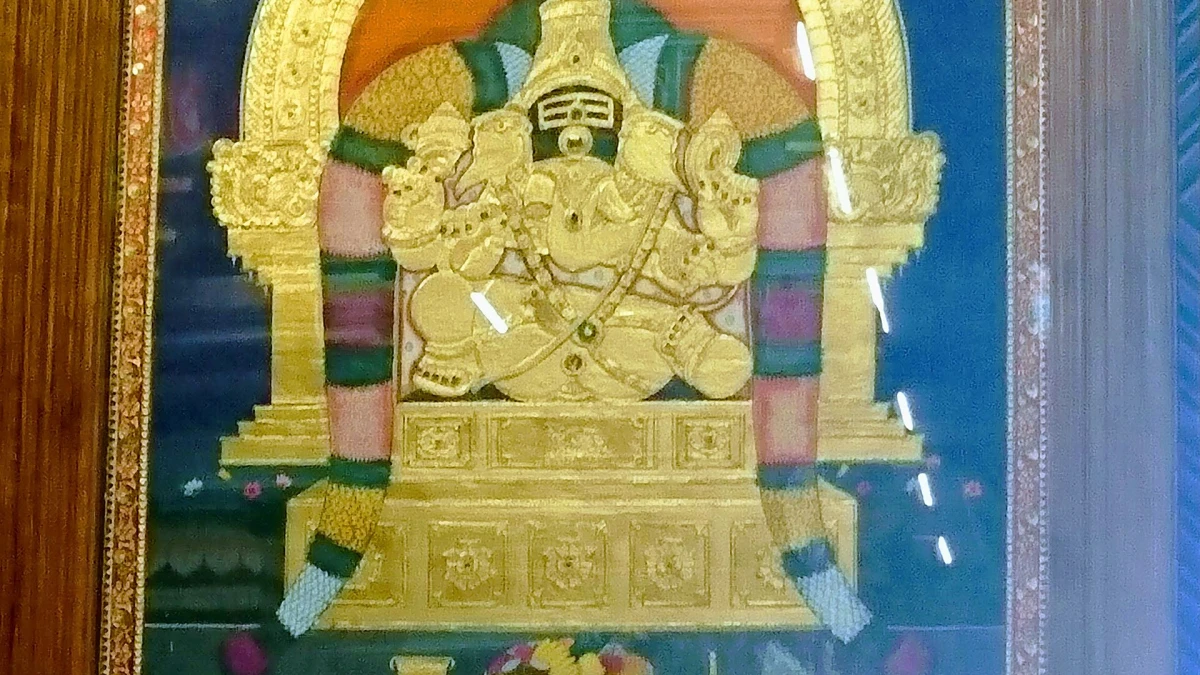
2. Gesso Work (Muckwork) Comparison
Examine the embossed relief under light to immediately identify the school:
Tanjore Gesso: Thick, bold, and high-relief. Made from French chalk and glue, it rises noticeably off the wooden board, creating dramatic physical shadows around thrones, pillars, and canopies.
Mysore Gesso: Soft, delicate, and low-profile. Formulated from white lead (*Makhi*), gamboge, and gum, it rises just slightly off the surface to provide subtle, tactile gold accents on jewelry without overpowering the figure.
3. Gemstone Embellishment
Tanjore paintings are famous for embedding vibrant semi-precious Jaipur glass stones into crowns and clothing. Mysore paintings rarely incorporate heavy glass gems; instead, master artists use fine brushwork and dot-relief to depict pearls and rubies.
4. Facial Expressions and Color Palettes
The greatest artistic divergence appears in facial rendering:
- Mysore Style: Renowned for delicate emotional expressions (*Bhava*). Faces display soft, feathered gradations of skin tone, luminous eyes, and gentle smiles.
- Tanjore Style: Figures feature rounded, cherubic proportions, bold almond eyes, and rich, solid color fills with minimal internal gradient shading.
Traditional Art Workshops at Kailasa Kaladhara
At Kailasa Kaladhara, we celebrate both extraordinary traditions. Our art masterclasses guide students through authentic board preparation, gesso relief, and authentic gold gilding for both Mysore and Tanjore schools across Bangalore.
Frequently Asked Questions (FAQs)
Which style is easier for a complete beginner?
Both have gentle learning curves when guided by a master. Tanjore art is often very forgiving for beginners because bold gold foil boundaries cleanly define the subjects.
Do both styles use real 22K gold foil?
Yes. Authentic masterworks in both traditions utilize genuine 22K gold leaf that retains its radiant shine for centuries without tarnishing.
How do I care for a framed Mysore or Tanjore painting?
Keep them framed under glass away from direct continuous sunlight and high humidity. Dust the wooden frames periodically with a dry microfiber cloth.
Explore Traditional Indian Painting in Bangalore
Discover the serene joy of creating sacred traditional art. Inquire about upcoming Tanjore and Mysore painting workshops at Kailasa Kaladhara today!













