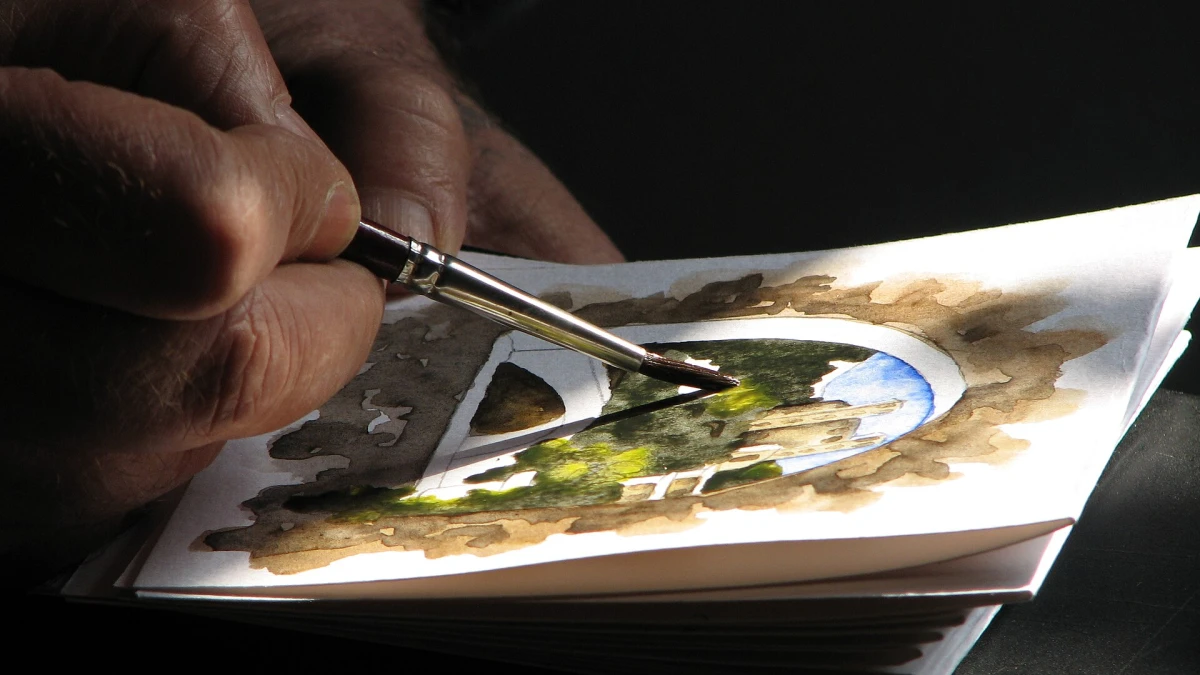
Watercolor is the medium of light, spontaneity, and luminous transparency. Unlike opaque acrylics or oils where mistakes can be covered with another coat of paint, watercolor allows white paper to glow through delicate layers of transparent pigment.
Every watercolor painting is created through the interplay of two foundational techniques: Wet-on-Wet for soft atmospheric blooms, and Wet-on-Dry for sharp, defined edges. Mastering the water-to-pigment ratio is the key to unlocking this magical medium.
Technique 1: Wet-on-Wet (Fluid Atmosphere)
In Wet-on-Wet, you wet the paper with clean water first, then introduce wet pigment with your brush. The pigment blossoms and travels spontaneously across the wet surface, creating soft, feathery gradients with zero hard lines.
This technique is essential for painting dramatic sunset skies, distant mountain ranges, mist over water, and soft petal gradients.
Technique 2: Wet-on-Dry (Crisp Structural Clarity)
In Wet-on-Dry, you apply wet paint to completely dry paper. The stroke stays exactly where your brush touches, producing crisp, razor-sharp edges and bold color saturation.
Use Wet-on-Dry for tree branches, building silhouettes, facial features, and foreground details that demand geometric clarity.
Explore beginner watercolor and canvas workshops through our creative visual arts batches.
The 4 Stages of Paper Wetness
A watercolorist’s greatest skill is reading the dampness of their paper:
- Puddle Stage: Water stands on the surface; paint disperses uncontrollably. Wait 30 seconds.
- Glossy Stage: Paper shines like glass; ideal for smooth Wet-on-Wet diffusion.
- Satin / Matte Stage: Shine has disappeared, but paper feels cool; perfect for soft-edged shadows.
- Bone Dry: Paper is room temperature; ready for crisp Wet-on-Dry layers and glazes.
Frequently Asked Questions
Why do my watercolor paintings look muddy?
Muddiness happens when you mix too many conflicting pigments on the page or disturb a semi-dry wash before it has completely dried. Allow each layer to dry fully before glazing over it.
Do I need white watercolor paint?
In classical transparent watercolor, you rarely use white paint. The white of the painting is the virgin paper itself, preserved by painting around it or using liquid masking fluid.