
In Indian classical music, the age-old proverb declares: Shruti Matha, Laya Pitha—pitch is the mother, and rhythm is the father. Without perfect pitch alignment (Shruti Shuddham), even the most dazzling vocal ornamentation loses its spiritual potency. The tanpura is the golden acoustic mirror that guides every student toward pitch purity.
Tuning your voice to merge seamlessly with the tanpura drone is the first and most critical skill in Carnatic vocal riyaz. Here is how beginner vocalists can cultivate pitch precision from day one.
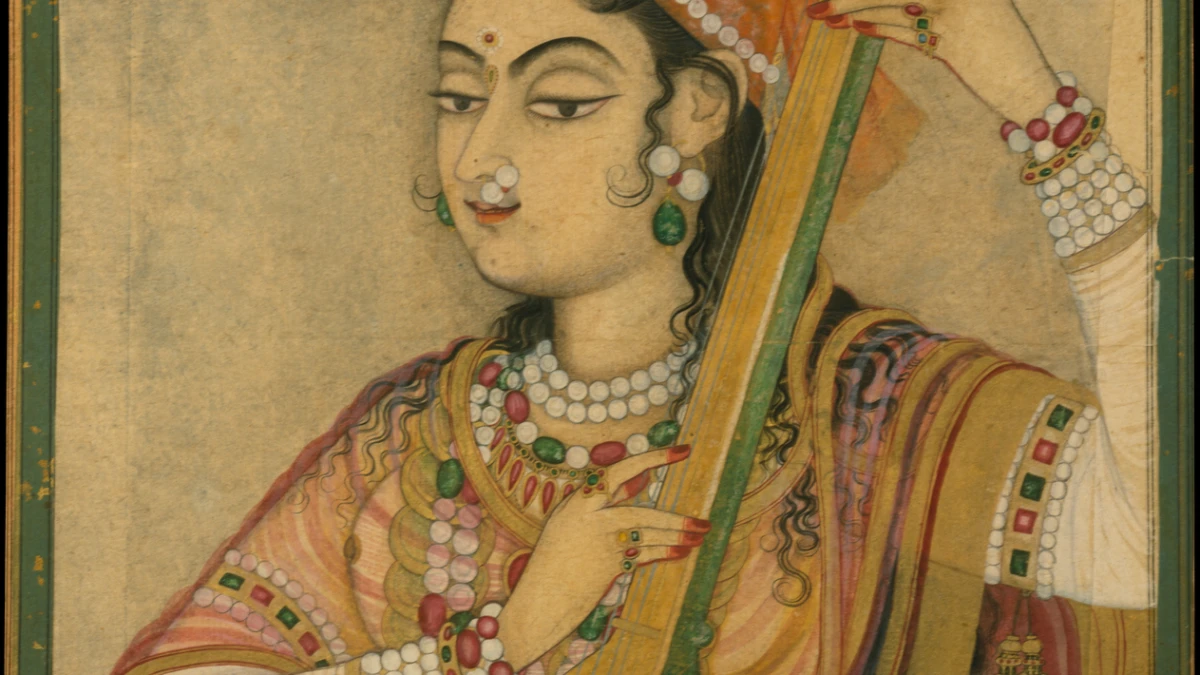
Understanding the Tanpura’s Four Strings
A standard acoustic or electronic tanpura plucks four strings in a continuous, mesmerizing loop:
- String 1 (Panchamam – Pa): Plucked first, sounding the fifth note of the scale. (In Madhyama shruti ragas, this string is tuned to Ma).
- String 2 & 3 (Tara Shadjam – Sa): The two middle strings tuned in unison to the middle tonic note (Sa).
- String 4 (Mandra Shadjam – Sa): The thickest bronze bass string, tuned one octave below to lower Sa.
The resulting acoustic harmonic envelope bathes the room in rich overtone resonances, providing an anchor for vocalists.
How to Hear Acoustic “Beating” When Out of Tune
When your sung note is slightly sharp or flat compared to the tanpura, an audible physical phenomenon known as acoustic “beating” occurs—a rapid, pulsing wobble in the sound.
As your pitch glides closer to the exact frequency, the pulsing slows down. When your pitch aligns perfectly, the beating disappears completely, and your voice feels as if it has vanished inside the drone itself.
Students can explore vocal mentoring across our Carnatic vocal curriculum in Bangalore.
3-Step Daily Shruti Riyaz Drill
Dedicate the first ten minutes of every morning practice session to this grounding vocal meditation:
- Silent Listening (2 Mins): Turn on your tanpura and close your eyes. Simply listen to the harmonic wash without singing. Internalize the fundamental Sa.
- Humming the Tonic (3 Mins): Close your lips and produce a gentle, resonant “Mmmm” sound matching the middle Sa. Feel the vibration buzzing in the roof of your mouth and sinuses.
- Sustained Akaram (5 Mins): Open your mouth to an open “Aaa” vowel. Hold the note steadily on a single breath for 12 to 16 seconds without vibrato, vocal shake, or volume surge.
Frequently Asked Questions
What is the ideal shruti pitch for female and male singers?
Female singers generally sing in the range of G (5th kattai), G# (5.5), or A (6th kattai). Male vocalists typically sing in C (1st kattai), C# (1.5), or D (2nd kattai). Choose a pitch where you can comfortably reach lower Pa and higher Pa.
Why does my pitch waver when holding long notes?
Wavering stems from shallow chest breathing. Engage your diaphragm and pelvic floor to deliver an unhurried, steady stream of pressurized air.













