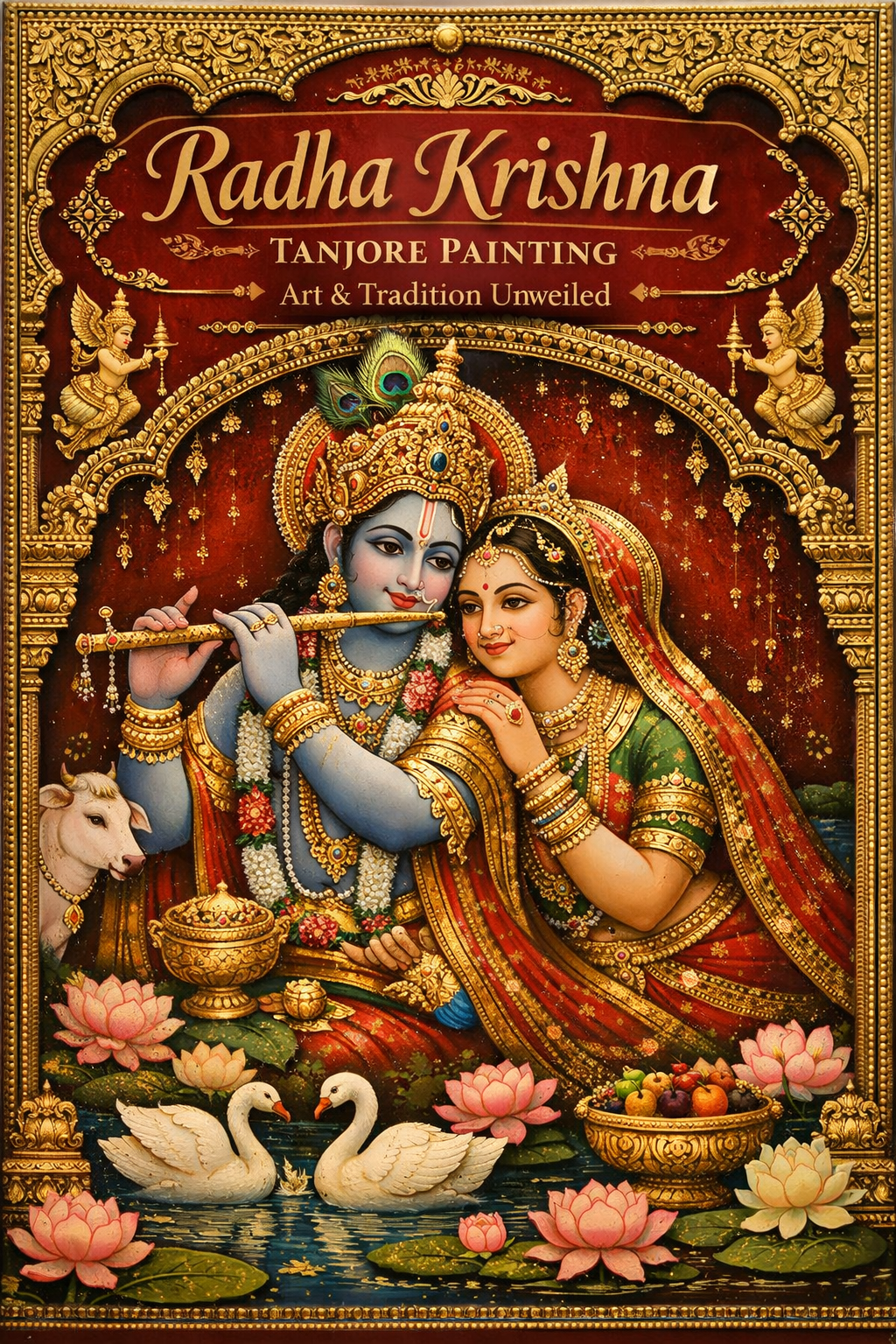
Radha Krishna Tanjore painting is a timeless treasure that captures the divine love story of Radha and Krishna through the exquisite South Indian traditional painting style known as Tanjore art. This article delves deep into the heart of these paintings—highlighting their origins, unique Tanjore art techniques, and why Radha Krishna artwork remains treasured for centuries. Discover the vibrant colors, intricate gold foils, and spiritual symbolism that bring these masterpieces to life. For readers intrigued to learn more about radha krishna tanjore painting, this guide offers a thorough exploration from history to technique.
What makes Radha Krishna Tanjore paintings so special?
Radha Krishna Tanjore paintings stand out due to their rich cultural story and the opulent artistic approach of Tanjore art. Originating in the town of Thanjavur (formerly Tanjore), Tamil Nadu, these paintings are renowned for their majestic portrayal of Hindu gods, often adorned with glass beads, vibrant colors, and layers of gold foil that give a three-dimensional effect. Besides their aesthetic appeal, these paintings symbolize divine love and spiritual enlightenment—qualities which resonate deeply within South Indian traditions.
Tracing the history and legacy of Tanjore art techniques
The history of Tanjore art dates back to the 16th century, flourishing under the reign of the Nayakas and Maratha dynasty, with Raja Serfoji II playing a pivotal role in preserving this craft. Artists used a base of wooden planks where layers of cloth and chalk paste created the canvas. What distinguishes Tanjore art techniques is the use of gold leaf overlaid on relief work, which provides a gleaming richness and texture unmatched by other Indian art forms.
How do artists create the remarkable texture and brilliance in these artworks?
The hallmark of Radha Krishna Tanjore paintings lies in the delicate layering and intricate application processes. The steps include:
- Preparing the wooden base with cloth and chalk paste.
- Sketching the divine figures of Radha and Krishna with precise lines.
- Applying natural dyes or pigments to bring vivid color layering.
- Embedding gold foil and semi-precious stones to accentuate jewelry and halos.
- Final varnishing to enhance the painting’s durability and shine.
The meticulous attention to minute details such as facial expressions, jewelry designs, and posture signifies the mastery behind these creations.
Symbolic elements found in Radha Krishna artwork
Symbolism is intrinsic to Radha Krishna artwork. Common elements include:
- Peacock feathers representing Lord Krishna’s divine playfulness.
- Lotus flowers denoting purity and spiritual awakening.
- Flute as a symbol of divine music and cosmic connection.
- Gold embellishments reflecting wealth, prosperity, and sacredness.
These symbols combined with the artistic style transmit a message of love, devotion, and harmony.
Where is the tradition of Radha Krishna Tanjore painting most prevalent today?
While originally flourishing in Tamil Nadu, this art form enjoys immense popularity across India and among art collectors worldwide. Contemporary artists continue to innovate within traditional frameworks. Artisans in Thanjavur still create these paintings using age-old methods, but many have adapted to newer themes and personalized styles to cater to modern tastes.
What role does this art play in modern Indian culture?
Radha Krishna Tanjore painting serves not only as decorative art but also as a cultural bridge connecting ancient spirituality to contemporary households and temples. They are integral in devotional ceremonies and festivals, inspiring both believers and art lovers.
How sustainable is the production of Tanjore paintings?
Sustainability has gained attention recently. Many artists source natural colors and recycle wooden bases. However, the use of traditional materials like gold foil remains expensive, prompting some to explore eco-friendly alternatives without compromising authenticity.
Can learning the art of Tanjore painting be accessible today?
Absolutely. Several institutions and workshops offer training in Tanjore art techniques. Those fascinated by Radha Krishna artwork might find creative inspiration and skill-building opportunities by enrolling in hands-on courses or online tutorials that delve into painting methods and cultural narratives.
How do Radha Krishna Tanjore paintings compare to other Indian traditional paintings?
Unlike Mughal miniatures or Madhubani paintings, Tanjore paintings emphasize:
- Use of heavy gold leaf and precious stones.
- Distinctive three-dimensional look with relief work.
- A focus on divine religious figures with elaborate ornamentation.
- Bright, contrasting colors over subtle earth tones.
This unique style makes Tanjore paintings instantly recognizable and highly valued among collectors worldwide.
Where can one find authentic Tanjore paintings today?
Authentic artworks are available at art galleries specializing in South Indian traditions, cultural fairs, and artisan cooperatives. Moreover, many online platforms showcase genuine pieces crafted by skilled artists in Thanjavur. Those wishing to explore Tanjore art techniques might also turn to social media for inspiration and direct purchases.
Wrapping Up the Artistic Journey of Radha Krishna Tanjore Painting
The world of radha krishna tanjore painting merges deep spiritual symbolism and masterful craftsmanship that continues to enchant art enthusiasts globally. The blend of vibrant hues, gold embellishments, and divine themes makes this South Indian traditional painting highly sought after. If you’re inspired to learn more or add this cultural marvel to your collection, turning to Kailasakaladhara offers wonderful guidance and resources. For more tips, updates, or inspiration, consider visiting kailasa kaladhara.
FAQs
- What is the main feature of Radha Krishna Tanjore painting? It features detailed gold foil work and vibrant depictions of Radha and Krishna.
- Which materials are used in Tanjore art techniques? Artists use wooden bases, chalk paste, natural dyes, gold foils, and semi-precious stones.
- Where did the Tanjore painting style originate? It originated in Thanjavur, Tamil Nadu, in the 16th century.
- Are Radha Krishna Tanjore paintings still made today? Yes, many traditional artisans continue the craft with authentic methods.
- Can beginners learn Tanjore painting? Yes, many workshops and courses offer training in this art form.