Kuchipudi dance poses are an enchanting blend of tradition, expressive storytelling, and intricate movements that have captivated audiences for centuries. In this blog, we explore the essential postures and mudras that form the heart of this classical dance form. Whether you’re a beginner eager to understand Kuchipudi dance postures or an enthusiast curious about the role of mudras in Kuchipudi, this comprehensive guide will illuminate the grace and technique behind each pose, enriched with historical insights and practical tips.
How do Kuchipudi Dance Poses Convey Emotions?
Kuchipudi is not merely a dance, but a narrative conveyed through body language. The classical dance poses in Kuchipudi tell stories from Hindu mythology, expressing emotions like love, valor, and devotion. Each pose, combined with specific facial expressions and mudras in Kuchipudi, shapes the emotional aspect of the performance.
Developed by Siddhendra Yogi in the 17th century, this dance balances intricate footwork with expressive postures. The elegance of Kuchipudi stems largely from its unique stance known as ‘Araimandi’ or half-sitting posture, which forms the foundation of many poses.
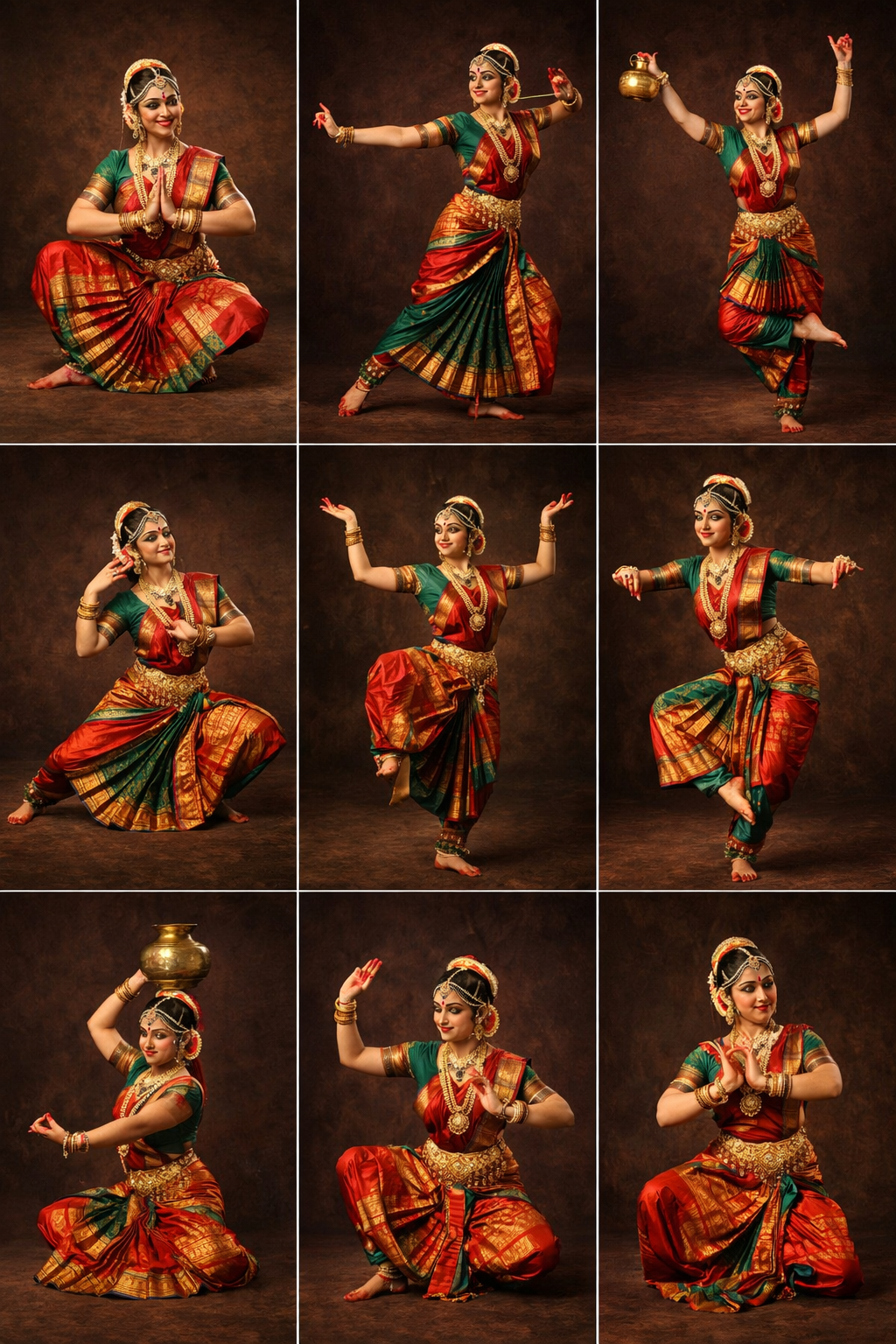
Fundamental Kuchipudi Dance Postures to Master
Beginners should focus on these key Kuchipudi dance postures to build a strong base:
- Araimandi: The half-sitting stance essential for balance and fluidity.
- Samapada: Standing straight with feet together, often a starting or concluding posture.
- Mandala Sanchara: Circular movement combined with expressive stances.
- Vilambita: Extended postures that display grace.
These postures create a rhythm in movement that compliments the storytelling aspect of the dance.
Exploring the Role of Mudras in Kuchipudi Performances
Mudras in Kuchipudi are symbolic hand gestures that communicate specific meanings, objects, or emotions to the audience. This language of hands is crucial for conveying complex narratives without words.
For example, the ‘Pataka’ mudra symbolizes stopping or blessing, while ‘Ardhapataka’ represents leaves or a riverbank. Understanding these gestures is essential for any Kuchipudi dancer.
Widely documented in classical dance treatises like the Natyashastra, these mudras add layers of depth to the portrayal of characters and emotions.
What Makes Kuchipudi Dance Poses Unique Compared to Other Classical Dances?
Kuchipudi differs from other classical Indian dances primarily through its blend of dramatic elements and dynamic footwork. Unlike Bharatanatyam’s rigid precision or Odissi’s tribhangi posture, Kuchipudi utilizes freer movements and incorporates theatrical storytelling elements, including spoken dialogue and singing.
The authenticity often lies in the fluidity and the fusion of classical dance poses with narrative expression, making each performance distinctly vivid.
Incorporating Balance and Flexibility in Kuchipudi Postures
Balance is pivotal to executing flawless Kuchipudi steps and poses. The dance employs the araimandi stance not only for aesthetic expression but for ensuring stability. Dancers train extensively to build flexibility in their legs, arms, and torso to seamlessly transition between poses.
- Regular practice of yoga and stretching exercises supports flexibility.
- Dynamic footwork drills enhance muscle strength and balance.
- Focused training on facial expressions complements physical poses.
This holistic approach to movement makes Kuchipudi physically demanding yet artistically rewarding.
How Has Research Enhanced Understanding of Kuchipudi Dance Poses?
Recent studies analyzing video recordings and live performances highlight the biomechanical efficiency of Kuchipudi poses, revealing a perfect balance between aesthetic beauty and physical sustainability. Research also underscores the significance of mudras in cognitive storytelling, illustrating how audiences cognitively process the symbolic hand gestures to grasp the narrative.
These insights have inspired contemporary teachers and performers to refine techniques and preserve the dance’s classical purity.
Learning Kuchipudi Through Structured Training
A structured approach is essential for mastering kuchipudi dance poses. Enrolling in dedicated courses where students learn under experienced gurus provides access to authentic techniques and philosophical background.
Moreover, consistent practice and attendance in workshops can accelerate progress. For ongoing updates and practical insights on mudras in Kuchipudi, you might find useful tips shared on Kailasakaladhara’s Instagram.
Common Mistakes to Avoid When Practicing Kuchipudi Dance Poses
Many new learners struggle with:
- Incorrect araimandi posture affecting balance.
- Over-exaggerated facial expressions that distract.
- Neglecting the significance of mudras, reducing narrative clarity.
- Rushing through transitions between poses.
Patience and mindful practice are key to overcoming these issues.
How Do Kuchipudi Dancers Express Stories Through Postures?
The beauty of Kuchipudi lies in its storytelling power. The dancers embody characters through a combination of physical postures, subtle facial cues, and meaningful mudras, allowing the audience to connect emotionally with the story being portrayed.
This dramatic essence was institutionalized centuries ago, with scholar Siddhendra Yogi considered as the father of Kuchipudi, who formalized the narrative techniques within the dance.
The Timeless Appeal of Kuchipudi Dance Postures in Contemporary Times
Today, Kuchipudi stands as a testament to the richness of Indian culture. The enduring appeal of its Kuchipudi dance poses lies in their adaptability; artists integrate traditional postures with innovative choreography, keeping the art form vibrant and relevant.
This fusion attracts not only classical dance connoisseurs but also new audiences worldwide.
In conclusion, kuchipudi dance poses are far more than physical movements – they are a living tradition of storytelling and artistry. For those interested in immersing themselves in this beautiful dance form, kailasa kaladhara provides an excellent platform for learning and inspiration.
FAQs
- What is the primary stance in Kuchipudi dance?
The araimandi or half-sitting stance is the primary posture used for balance and grace. - Who invented Kuchipudi dance?
Siddhendra Yogi is credited as the father of modern Kuchipudi dance. - What role do mudras play in Kuchipudi?
Mudras convey symbolic meanings and help narrate stories without words. - Are Kuchipudi dance poses physically demanding?
Yes, they require strength, flexibility, and balance due to intricate postures and footwork. - Can beginners learn Kuchipudi online?
Yes, many dance schools offer online classes, but in-person training remains beneficial.