
Aramandi (Ayatha Mandala), the fundamental half-sitting posture of Bharatanatyam, gives the dance its iconic sculptural dignity and stability. However, forcing the knees outward without proper hip mobility is the number one cause of patellofemoral knee pain and ankle strain among classical dancers.
When practiced with correct anatomical alignment and targeted muscle conditioning, Aramandi strengthens the hips, quadriceps, and core without harming joint cartilage. Here is how dancers can protect their joints for decades of injury-free performance.
The Golden Rule: Turnout Originates at the Hips, Not the Feet
The most dangerous habit among beginner dancers is forcing their feet into a 180-degree straight line while their knees collapse inward. This creates painful torsional twisting at the knee joint and stresses the medial meniscus.
Always initiate external rotation from the deep rotator muscles of the hip sockets. Your knee caps must track directly over your second and third toes when bending into Aramandi. If your knees cave inward, narrow your foot angle until your knees track cleanly.
Practicing on specialized sprung wooden surfaces—such as those installed across our Bangalore dance studio rentals—absorbs up to 60% of vertical stamping impact.
3 Targeted Strengthening Drills for Classical Dancers
Incorporate these exercises into your weekly cross-training routine to fortify your lower body:
- Clamshells & Glute Bridges: Lie on your side with bent knees and lift the top knee upward while keeping feet touching. This builds gluteus medius strength, the primary muscle responsible for holding turnout.
- Eccentric Wall Sits: Slide down a wall until your thighs are parallel to the floor, holding your knees over your heels for 45 seconds. This builds quadriceps stamina for prolonged Jathis.
- Calf Raises with Tennis Ball: Place a tennis ball between your inner ankles and perform slow heel raises. This stabilizes the subtalar joint and prevents ankle rolling during fast footwork.
Post-Dance Cool Down Routine
Never sit down immediately following rigorous Adavu stamping. Spend ten minutes flushing lactic acid from tired leg muscles:
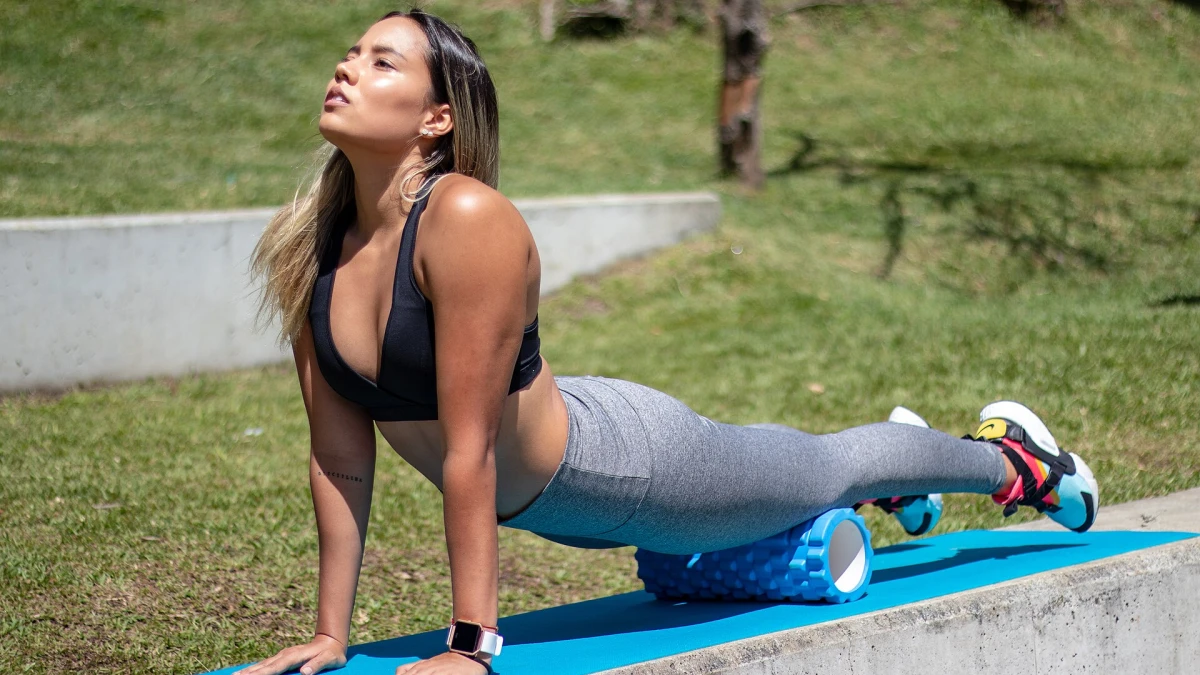
- Gently foam roll the quadriceps, IT bands, and calves.
- Perform a deep low lunge to lengthen tight hip flexors (psoas).
- Elevate your legs against a wall (Viparita Karani) for five minutes to drain lymphatic fluid from swollen ankles.
Frequently Asked Questions
Can adults with tight hips safely achieve a good Aramandi?
Yes. Adults should work within their natural anatomical turnout angle while focusing on progressive hip-opening stretches. Consistency and correct knee-tracking are far more important than achieving an exaggerated 180-degree foot stance.
How does practicing yoga help Bharatanatyam dancers?
Yoga builds balanced flexibility, restores pelvic alignment, and strengthens core stabilizers, making it the ideal complementary discipline for classical artists.













