
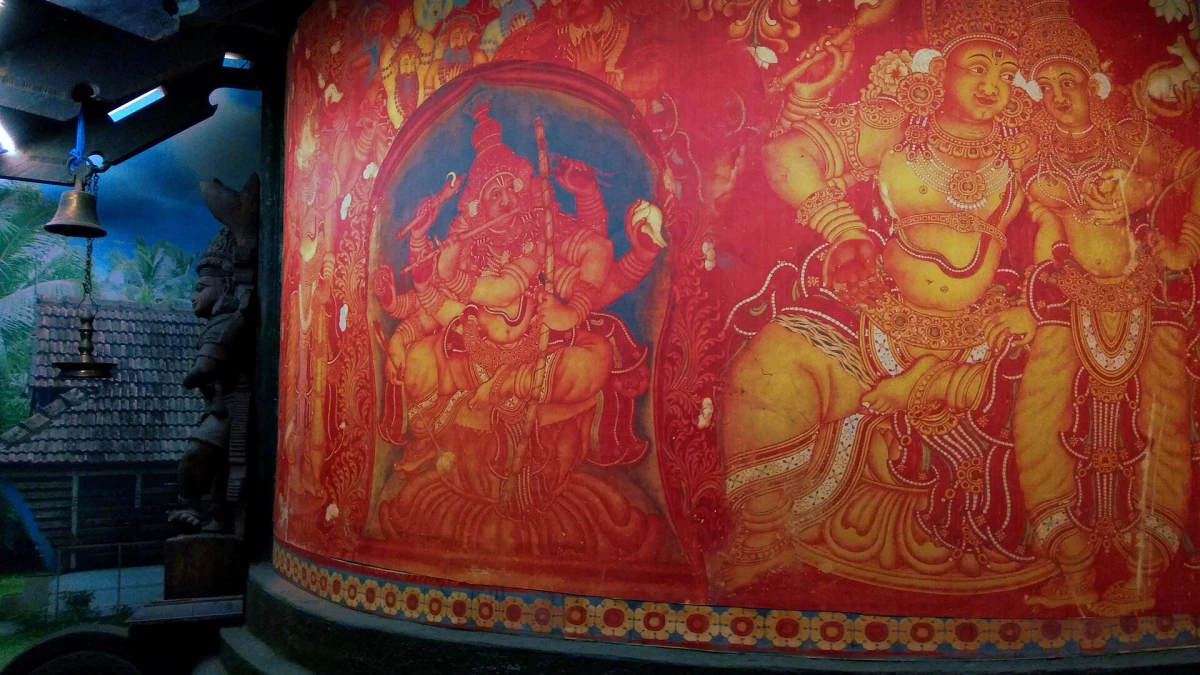
Adorning the sacred temple sanctums and royal palace walls of Kerala, the classical Kerala Mural tradition (dating from the 9th to 18th centuries) is one of India’s most visually breathtaking artistic heritages. Characterized by luminous warmth, flowing lines, and ornate mythological figures, these paintings radiate divine energy.
What makes authentic Kerala Murals truly extraordinary is their strict adherence to the Panchavarna—the sacred five-color palette derived entirely from natural mineral rocks, tree barks, and soot.
The Sacred Panchavarna Five-Color Palette
Traditional muralists never used synthetic paints. Every color was prepared by hand from local nature:
- Yellow (Manayola): Extracted from natural arsenic-bearing mineral stones, symbolizing wisdom, divinity, and Sattvic purity.
- Red (Chayilyam): Prepared from powdered red vermilion cinnabar or laterite stone, representing dynamic power and royal valor (Rajas).
- Green (Neelamaram): Created from the juice of the Neelamari plant (indigo) mixed with yellow ochre, symbolizing nature, prosperity, and peace.
- White: The natural ground made from powdered sea-shell lime (Chunnam), left unpainted to represent purity and light.
- Black (Karuppu): Hand-collected soot from sesame oil lamps (lampblack), used for final defining outlines.
Anatomy of the Classical Kerala Mural Face
Characters in Kerala murals are drawn according to ancient Dhyana Shlokas (meditative visualization verses). Gods and goddesses feature large, expressive lotus-petal or fish-shaped eyes (Meen Netra), plump smiling lips, arched eyebrows, and elaborate crowns (Kirita) adorned with golden beads.
Shading is achieved not through Western light-and-shadow, but through intricate stippling (micro-dots) in warm reddish tones along the edges of the form, creating a three-dimensional embossed appearance.
Explore traditional visual arts workshops through our fine arts curriculum.
Step-by-Step Canvas Preparation in Modern Workshops
While temple walls were plastered with lime and sand seasoned in tender coconut water, modern students create authentic Kerala murals on stretched canvas or wooden boards using natural acrylic ochres and bamboo brushes.
Frequently Asked Questions
Can beginners without prior drawing experience learn Kerala Mural art?
Yes. Traditional training uses proportional grid templates (Talamana), allowing beginners to trace and paint intricate deities with confidence.
What are the most popular subjects painted in Kerala Murals?
Lord Ganesha, Anantasayana Vishnu, Shiva-Parvati, Krishna playing the flute, and the royal coronation of Rama are the most revered and beloved subjects.













