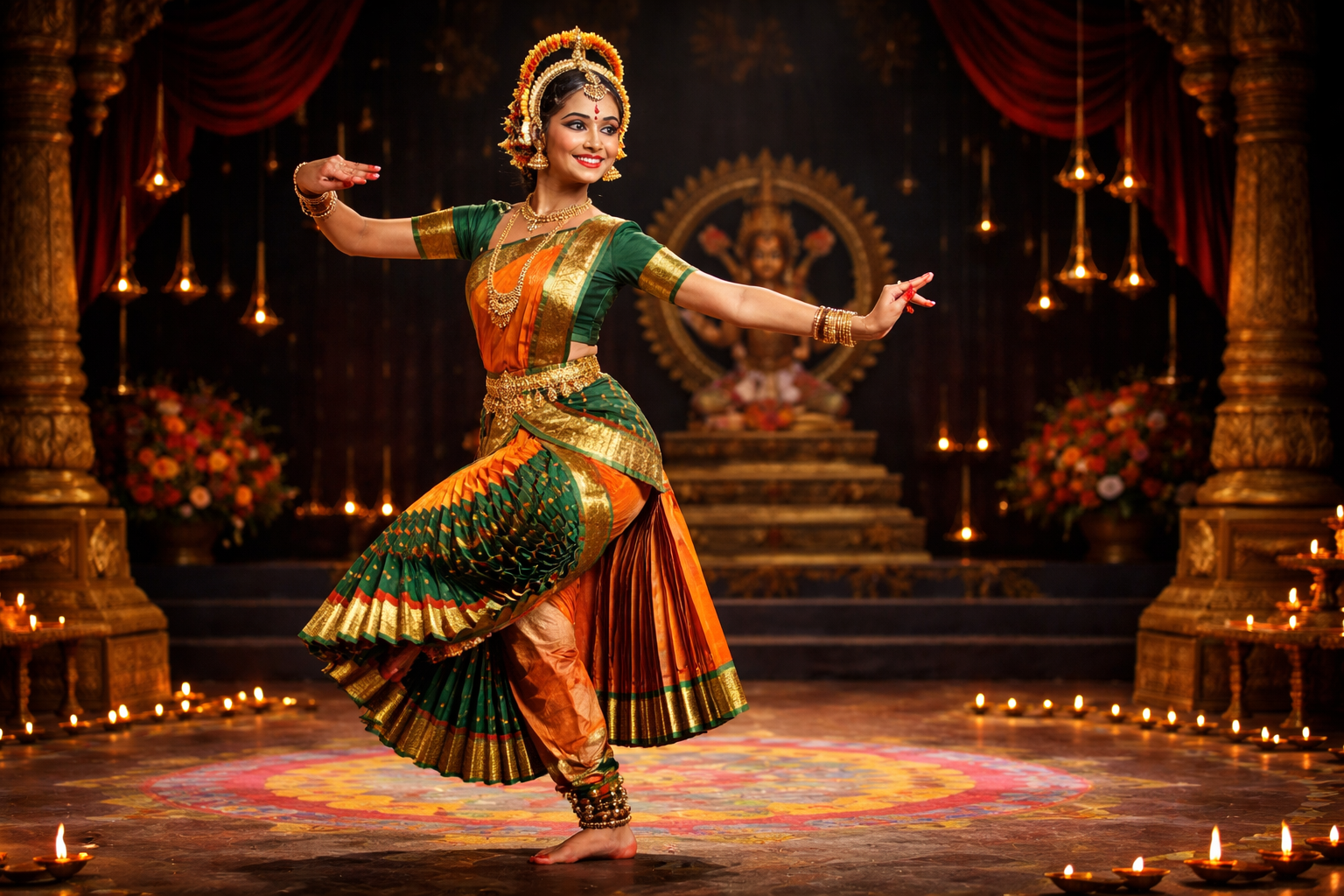
Bharatanatyam performance stands as a captivating embodiment of India’s rich cultural heritage, showcasing one of the oldest and most revered forms of Indian classical dance. This dance style, rooted deeply in the Bharatanatyam performance tradition, merges expressive storytelling with intricate movements, reflecting centuries-old temple dance tradition and the unique Nritya style.
Tracing the Origins of Bharatanatyam
Originating in Tamil Nadu, Bharatanatyam is often credited to the sage Bharata, who documented Natya Shastra, the ancient treatise on performing arts. This dance form was traditionally performed in temples as a devotional offering, evolving over time from sacred rituals to stage performances.
What Elements Define a Bharatanatyam Performance?
A Bharatanatyam performance combines precise footwork, hand gestures (mudras), and facial expressions (abhinaya) to narrate epic stories from Hindu mythology and scriptures. It follows a structured format starting from Alarippu, Jatiswaram, Varnam, Padams, and Tillana, each showcasing different facets of the dancer’s skill and emotional range.
The Role of Temple Dance Tradition in Bharatanatyam
This dance is intricately linked to temple dance traditions where it served not just as art but as a medium of spiritual expression. The rhythmic beats and symbolic gestures were designed to invoke divine presence, making performances a spiritual experience both for the dancer and the audience.
How Does the Nritya Style Differentiate Bharatanatyam?
The Nritya style in Bharatanatyam emphasizes expressive dancing, where storytelling through intricate gestures and facial expressions takes center stage, distinguishing it from mere pure dance (Nritta). This evocative narrative style brings epic characters and emotions alive vividly on stage.
Techniques and Training Behind a Bharatanatyam Performance
Mastering Bharatanatyam requires rigorous training that can span years. Dancers work intensively on coordination, stamina, and expression under skilled gurus. The interplay of rhythm and gestures demands not only physical agility but also emotional depth.
Exploring the Instruments Accompanying Bharatanatyam
Classical instruments such as mridangam, nattuvangam, flute, and veena provide the musical backdrop. The rhythmic nattuvanar plays cymbals, guiding the dancer’s tempo and stressing intricate tala cycles that sync beautifully with footwork.
What Impact Has Research Had on Contemporary Bharatanatyam?
Recent studies highlight the cognitive and emotional benefits of practicing such complex dance forms. Research shows enhanced neural connectivity and memory in dancers, affirming Bharatanatyam’s relevance beyond aesthetics as a holistic discipline promoting mental and physical well-being.
Notable Personalities Who Shaped Bharatanatyam’s Modern Era
Legends like Rukmini Devi Arundale and Balasaraswati played pivotal roles in popularizing Bharatanatyam globally. Their dedication helped transition the art from temples to theatrical stages, thus introducing it to diverse audiences worldwide.
How Can One Experience or Learn Bharatanatyam Today?
With increasing appreciation worldwide, numerous dance schools offer comprehensive courses teaching both tradition and technique in Bharatanatyam. Students can immerse themselves in this ancient art form through structured lessons, workshops, and performances.
Embracing Bharatanatyam: More Than Just a Dance
Engaging with Bharatanatyam is delving into a vast cultural repository, a dance that combines spirituality, history, and artistry. It invites participants and audiences alike to witness compelling stories enacted with grace and dexterity, bringing alive timeless Indian heritage.
Furthermore, for those interested in expanding their skills and knowledge of Indian classical dance, joining a dedicated course or attending live performances offers invaluable insights and inspiration into this profound temple dance tradition.
In conclusion, the vibrancy and nuanced expression of the Bharatanatyam performance continue to inspire dancers and spectators around the world. For enthusiasts seeking to explore this captivating Nritya style further, kailasa kaladhara provides an excellent avenue for learning and connecting with authentic Bharatanatyam pedagogy.
FAQs on Bharatanatyam Performance
- What makes Bharatanatyam different from other Indian classical dances? It uniquely blends expressive storytelling with rhythmic footwork within the Nritya style.
- Is Bharatanatyam still performed in temples? Primarily, it is a stage art today, but some temples retain the tradition for festivals.
- How long does it take to learn Bharatanatyam? Basic proficiency typically takes 3 to 5 years with regular practice.
- Who is considered the father of Bharatanatyam? Sage Bharata is traditionally credited in the Natya Shastra as the foundational figure.
- Can anyone learn Bharatanatyam? Yes, it’s accessible to dancers of all ages with dedication and passion.