
Breath is the invisible link that connects body and soul. For classical dancers sustaining exhausting 40-minute Varnams and vocalists holding unwavering notes in upper octaves, breath capacity is the true limiting factor of performance.
By incorporating four foundational Pranayama techniques into your weekly routine, you can expand vital lung volume, stabilize performance anxiety, and cultivate boundless energetic stamina.
1. Ujjayi (Victorious Ocean Breath) for Core Stability
Ujjayi involves gently contracting the glottis in the back of the throat during both inhalation and exhalation, producing a soft, soothing ocean-like sound.
This subtle restriction warms the incoming air, slows the respiratory rhythm, and engages deep abdominal core muscles, providing unwavering stability during complex dance footwork.
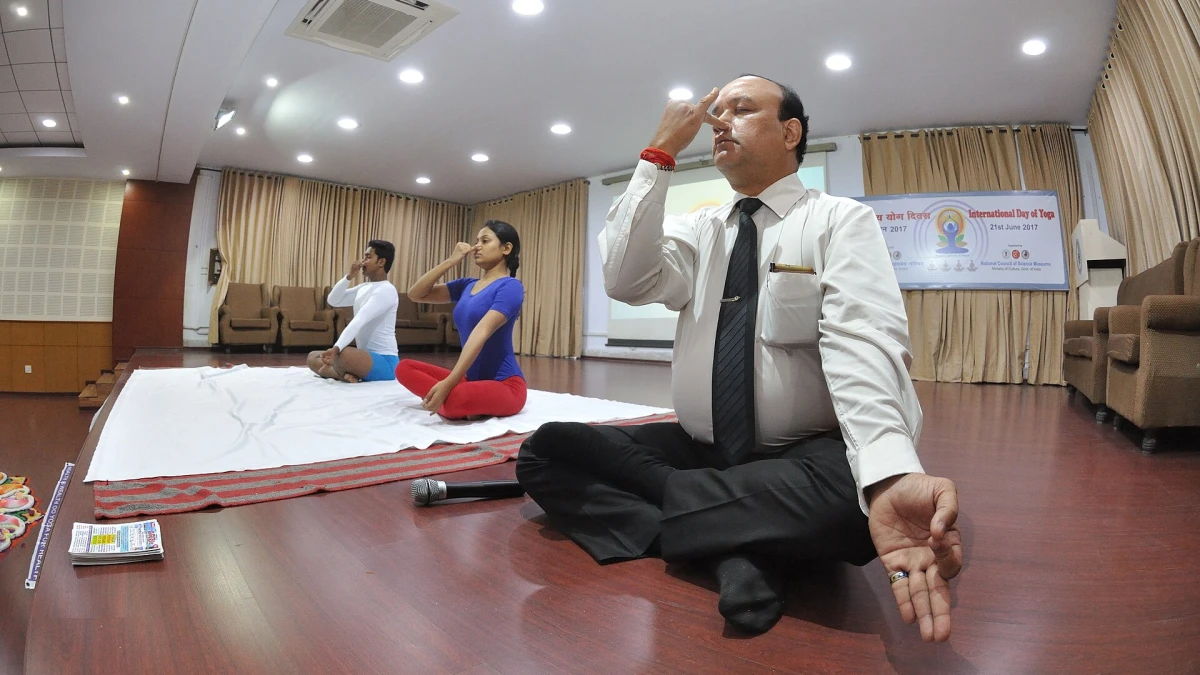
2. Anulom Vilom (Alternate Nostril Breathing) for Calm
Close your right nostril with your thumb, inhale slowly through the left nostril for 4 counts, close both nostrils for 2 counts, and exhale through the right nostril for 6 counts. Repeat on the opposite side.
This ancient practice balances the sympathetic and parasympathetic nervous systems, calming pre-stage performance anxiety and grounding scattered thoughts.
Learn authentic breath integration across our yoga and alignment courses.
3. Kapalabhati (Skull Shining Breath) for Diaphragm Agility
Kapalabhati features passive inhalations followed by rapid, rhythmic, forceful exhalations driven by sharp inward snaps of the lower abdomen.
Performing 3 rounds of 30 strokes clears stagnant air from the lower lobes of the lungs, strengthens the diaphragm, and builds rapid vocal cord responsiveness for fast musical passages (Bhrigas).
4. Bhramari (Humming Bee Breath) for Vocal Resonance
Inhale deeply, gently close your ears with your thumbs, and produce a sustained, rich humming sound on exhalation. The gentle acoustic vibrations stimulate nitric oxide production in the sinuses and massage the vocal folds.
Frequently Asked Questions
Can children practice these pranayama techniques safely?
Yes. Gentle breathing like Bhramari and Anulom Vilom is wonderful for children, improving classroom concentration and emotional balance.
How soon will I notice improvements in my singing stamina?
Most vocalists notice longer sustained phrases and easier breath transitions within three to four weeks of consistent daily practice.













