
Mohiniyattam, the classical dance of Kerala, embodies pure Lasya—the delicate, gentle, and feminine aspect of Indian performing arts. Named after the celestial enchantress Mohini from Hindu mythology, this tradition captivates audiences through continuous swaying motions reminiscent of ocean waves and coconut palms swaying in coastal breezes.
Unlike the sharp geometric stamping of Bharatanatyam or the brisk pirouettes of Kathak, Mohiniyattam flows with circular continuity. Sudden angular jerks are avoided, creating an atmosphere of serene, hypnotic beauty.
Core Architectural Elements of Mohiniyattam
The movement vocabulary of Mohiniyattam is built on gentle curves (Andolika) and circular torso sweeps. Dancers maintain a rounded half-squat (Aramandalam), with feet kept slightly wider than in Bharatanatyam, allowing lateral weight shifts without abruptness.
The upper body moves in gentle figure-eight patterns, guided by fluid wrist rotations and expressive eye glances. The spine remains supple, bending gracefully with the rhythm of the waves.
Aspiring dancers can explore the historical roots of this art across our graded performing arts programs.
The Soulful Accompaniment of Sopana Sangeetham
Mohiniyattam is danced to Sopana Sangeetham, the slow, meditative temple singing style unique to Kerala. Accompanied by the cylindrical Maddalam drum, the Edakka (hourglass pressure drum), and the ringing Kuzhitalam cymbals, the music unfolds with serene majesty.
The lyrics, predominantly in Manipravalam (a poetic blend of Malayalam and Sanskrit), explore themes of intense devotion and surrender (Bhakti), elevating the dance into a spiritual offering.
Iconic Costume & Visual Identity
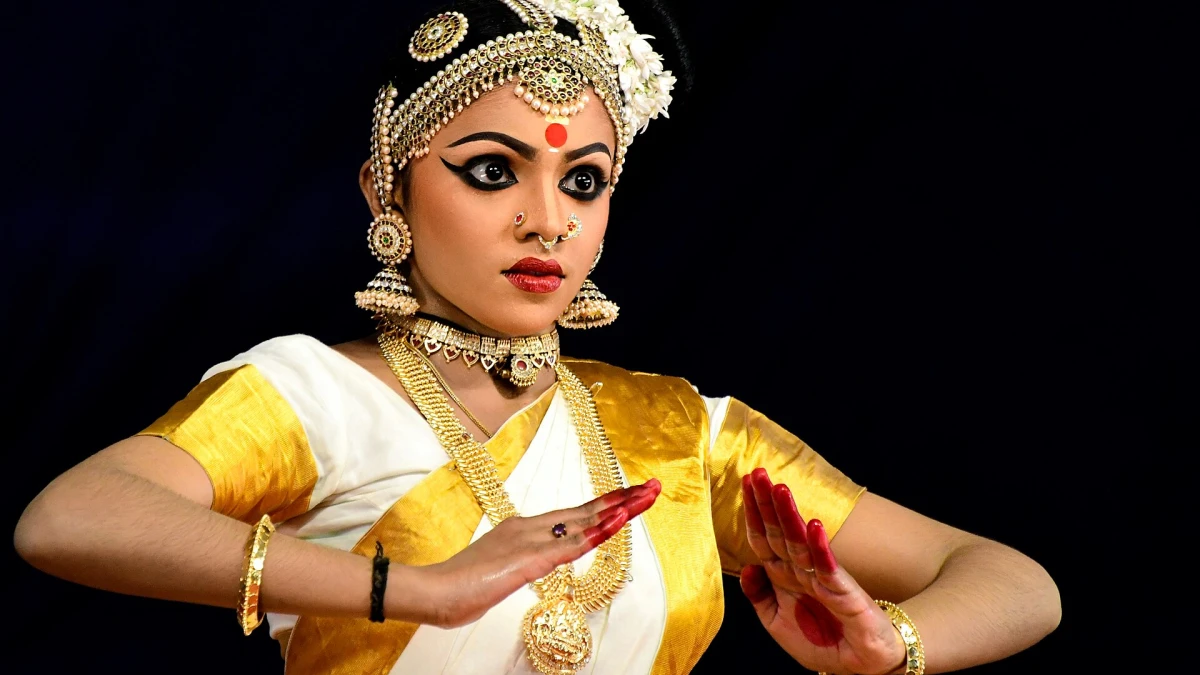
A Mohiniyattam dancer is instantly recognized by her elegant attire: a pristine off-white or cream silk saree bordered with rich gold Kasavu brocade. The hair is gathered into a distinctive side bun (Kuduma) encircled by fresh white jasmine blossoms.
The makeup is understated and luminous, designed to accentuate the subtle micro-movements of the eyes and brows rather than project theatrical drama.
Frequently Asked Questions
Can beginners learn Mohiniyattam without previous dance training?
Yes. Because of its gentle joint-friendly movements and flowing tempos, Mohiniyattam is wonderfully accessible to adult beginners and children alike.
How does Mohiniyattam differ from Kathakali?
While Kathakali is dynamic, highly theatrical, and dominated by vigorous masculine energy (Tandava), Mohiniyattam is lyrical, subtle, and devoted to refined feminine grace (Lasya).













