
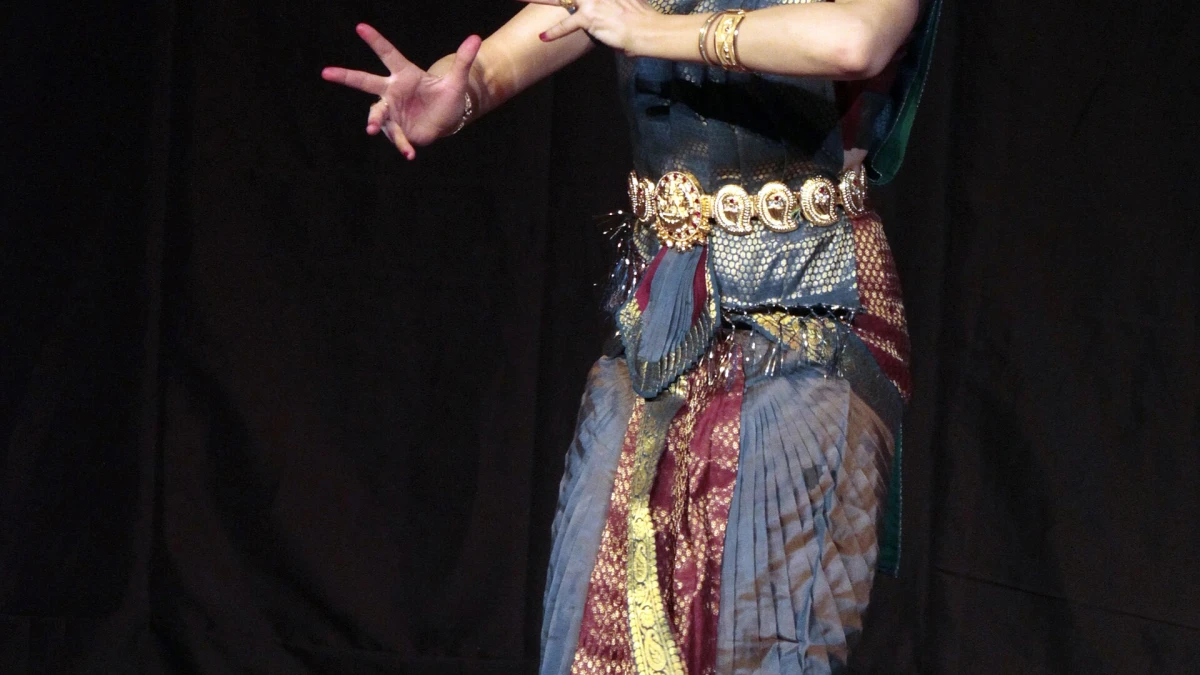
Asamyuta Hastas are the twenty-eight fundamental single-hand gestures in Bharatanatyam codified in Nandikeshvara’s ancient treatise, the Abhinaya Darpana. Each gesture acts as a visual syllable, allowing dancers to communicate concepts ranging from gods and clouds to rivers and gentle whispers.
Every Bharatanatyam student begins their mudra journey with Pataka and progresses through intricate positions like Tripataka, Ardhapataka, and Mayura. Maintaining energetic tension through every fingertip transforms simple hand shapes into powerful artistic expressions.
Why Finger Tension and Angle Matter in Classical Mudras
A limp hand dissipates the aesthetic power of classical Indian dance. In gestures like Pataka (the flag), all four fingers must press tightly together while the thumb bends gently inward toward the base of the palm.
When executing Shikharam (the peak), holding the thumb rigidly upright while curling the remaining fingers requires wrist control. Practicing these shapes during foundational dance courses trains muscular stamina and builds hand articulation.
Without crisp hand shapes, the audience cannot differentiate between a flower bud (Mukula) and a deer head (Mrigashirsha). Precision creates visual clarity across stage distances.
Key Viniyogas: How Single Gestures Tell Deep Stories
In classical Natya, gestures are not static poses; they carry specific applications known as Viniyogas. A single hand gesture can symbolize dozens of distinct objects or emotional states depending on motion and eye contact.
- Pataka: Symbolizes clouds, forests, night, blessing, or slapping away danger.
- Tripataka: Represents a crown, a lightning bolt, or an arrow flight.
- Katakamukha: Depicts plucking fragrant flowers, holding a garland, or drawing a bowstring.
- Alapadma: Illustrates a fully bloomed lotus, circular beauty, or a questioning heart.
Pairing these hand shapes with proper neck tilts (Griva Bheda) and eye movements (Drishti Bheda) elevates pure physical gesture into authentic dramatic storytelling.
Essential Daily Drill for Mastering Hand Precision
Dedicate five minutes at the beginning and end of each practice session to reciting the Asamyuta Hasta shloka while executing each gesture cleanly in rhythm. Hold each mudra at shoulder level for three slow breaths to build forearm endurance.
If you wish to delve deeper into classical repertoire, our mentors guide students through systematic technical training across our Bangalore dance centers.
Frequently Asked Questions About Asamyuta Hastas
What is the difference between Asamyuta and Samyuta Hastas?
Asamyuta Hastas are single-hand gestures (28 in total), while Samyuta Hastas are combined two-hand gestures (24 in total). Both systems work harmoniously to convey narrative depth in Bharatanatyam.
At what age should children begin learning hand gestures?
Children as young as 5 or 6 can memorize the Sanskrit shlokas and finger shapes. Learning mudras improves fine motor skills and bilateral coordination in growing youngsters.













