
When selecting extracurricular activities for their children, parents often view Martial Arts and Classical Dance as polar opposites: one seen as martial and aggressive, the other as gentle and artistic.
Yet in ancient Indian and Asian traditions, martial arts (such as Kalaripayattu and Karate) and classical dance (such as Bharatanatyam and Kathak) are sister disciplines sharing the exact same biomechanical and spiritual roots.
Should Children Learn Martial Arts, Dance, or Both?
Both disciplines train the child’s body to move with supreme economy, balance, and awareness. Martial arts develops rapid self-defense reflexes, explosive muscular power, and situational alertness. Classical dance refines rhythmic discipline, emotional storytelling, and musical coordination. Combining both creates children who are physically resilient, mentally disciplined, and culturally grounded.
Kailasa Kaladhara offers both disciplines across its Bangalore campuses, enabling holistic physical development.
1. Shared Biomechanics: The Power of the Low Stance
Examine a Karate practitioner’s horse stance (*Kiba-Dachi*) and a Bharatanatyam dancer’s *Aramandi*: they are structurally identical:
- Both lower the body’s center of gravity close to the earth.
- Both open the pelvic floor and strengthen the quadriceps, calves, and Achilles tendons.
- Both demand an upright, unbending spinal column supported by strong core abdominal muscles.
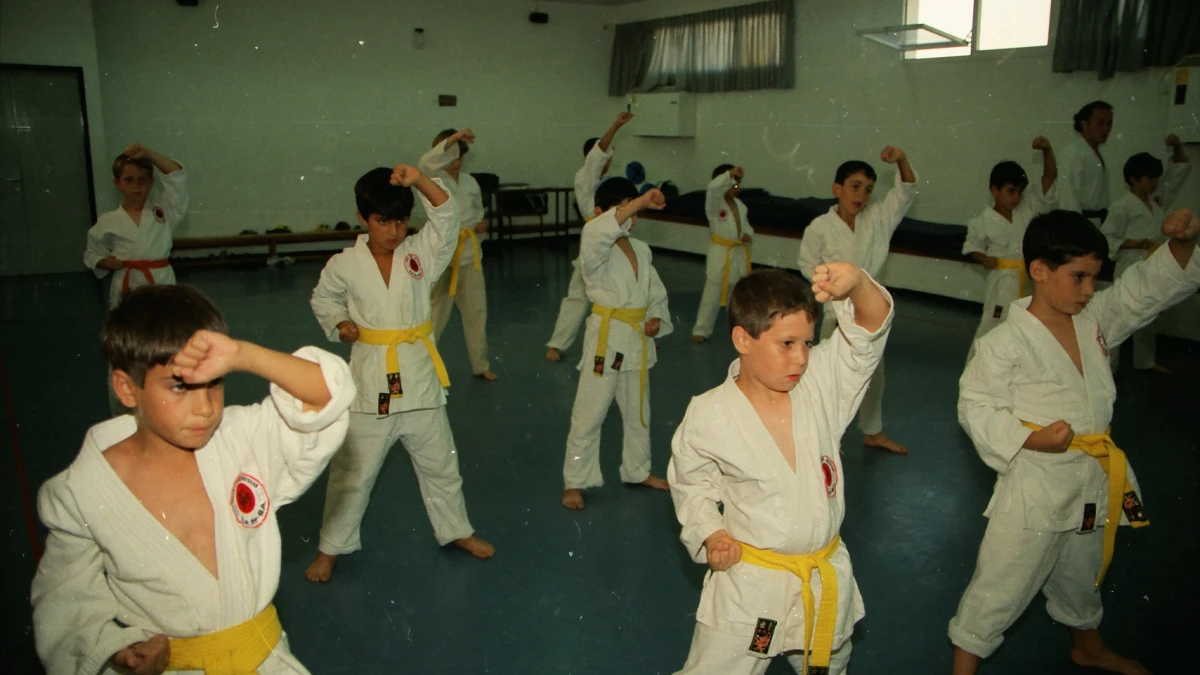
A child trained in classical dance naturally excels at martial arts kicks, while a young martial artist masters dance adavus with remarkable power and stability.
2. Spatial Awareness & Kinetic Coordination
In our modern screen-dominated world, children frequently struggle with spatial awareness and clumsy motor skills:
Martial arts trains a child to judge spatial distance (*Ma-ai*) instantly when evading a strike. Classical dance trains a child to track stage geometry and maintain equal distance from fellow dancers in complex group formations. Both train the brain to map three-dimensional space with razor-sharp precision.
3. Discipline and Etiquette (*Guru & Dojo Respect*)
Both traditions emphasize profound humility and respect for lineage:
- In the Dojo: Students bow (*Rei*) before stepping onto the practice mat, respecting masters and training partners.
- In the Dance Studio: Dancers touch the earth (*Bhumi Pranam*) to seek forgiveness before stamping, paying homage to the Guru.
This traditional etiquette teaches children self-control, patience, and humility—virtues that prevent school bullying and cultivate emotional maturity.
4. The Yin and Yang of Emotional Balance
Training only in physical combat can leave an energetic child overly aggressive. Training only in graceful art might leave them unprepared for physical confrontation:
Combining the martial and the lyrical creates the classical ideal: a human being who has the strength to protect themselves, yet possesses the sensitivity to appreciate poetry, music, and nature.
Holistic Youth Programs at Kailasa Kaladhara
At Kailasa Kaladhara, we encourage children to explore both disciplines. With certified masters in classical dance and traditional martial arts, our Bangalore centers provide an inspiring environment where boys and girls blossom into confident, balanced individuals.
Frequently Asked Questions (FAQs)
Will learning martial arts make my child stiff for classical dance?
No. Authentic traditional martial arts emphasizes suppleness, joint flexibility, and breathing over bulky rigid muscle building.
At what age can a child start martial arts classes?
Children can start basic motor agility and karate fundamentals safely from age 5 or 6.
Do girls benefit as much as boys from martial arts?
Absolutely! Martial arts builds vital self-defense reflexes, physical courage, and unshakeable self-confidence in young girls.
Build Strength, Agility, and Grace in Bangalore
Give your child the ultimate foundation in physical and mental mastery. Contact Kailasa Kaladhara today to explore our dance and martial arts programs!













